Where the Note Lands: Feedback, Timing and the Dancer’s Own Authority
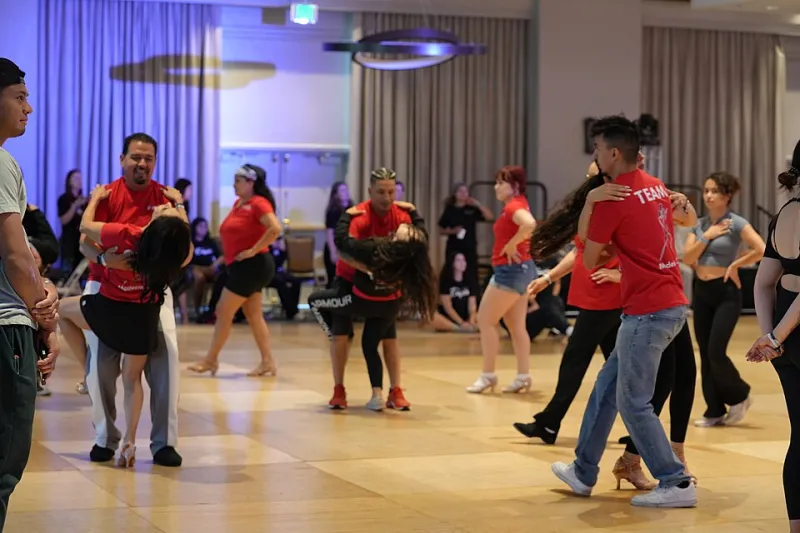
Photo: Rosiestep, CC BY-SA 4.0, via Wikimedia Commons
The run-through ends. The music stops. Everyone is still breathing. The choreographer or director says, “Just a few notes,” and the room rearranges itself. Dancers sit on the floor or lean against the mirror. Someone finds a pen. Someone else keeps moving, shaking out a leg. This is a familiar scene in UK rehearsal studios, and it is never quite as simple as it looks.
The first thirty seconds
The first thirty seconds after a run-through are not neutral. Bodies are still full of the work. Adrenaline is up. The dancer knows what went wrong before anyone says it. They felt the stumble, the late cue, the lift that did not quite land. If the first note is a correction, it can confirm a private anxiety and make it louder. If the first note is an acknowledgement of something that worked, it can settle the room enough for the rest to be heard.
This is not about being nice. It is about timing. A note given too early can land as a rebuke. A note given too late can feel disconnected from the work. The practical question is: what does the body need in order to hear? Sometimes it needs a minute of silence. Sometimes it needs a glass of water. Sometimes it needs the director to say, “That was a run-through, not a performance,” and mean it.
Language that leaves room
Notes are often phrased as instructions: do it faster, go further, hold that longer. Instructions have their place, especially in a technical rehearsal. But after a run-through, a more open language can be useful. “What happened when you got to the corner?” is different from “You missed the corner.” The first invites the dancer to report on their own experience. The second tells them they failed.
This is not about avoiding clarity. It is about respecting the work already in the body. A dancer who has spent three weeks building a phrase has a kind of knowledge that is not available to someone watching from the outside. The note that lands is often the one that connects to that knowledge rather than overwriting it.
Hierarchy and the shape of the room
Rehearsal rooms are not flat. There is a hierarchy, even in companies that try to work collaboratively. The choreographer speaks. The director speaks. The rehearsal director speaks. The dancers listen. This is not necessarily a problem, but it shapes how a note is received. A note from a peer might be tested immediately. A note from an authority figure might be carried for days before it is questioned.
Directors and choreographers can work with this. They can name the hierarchy rather than pretending it is not there. They can say, “This is a note to try, not a note to keep.” They can ask the dancer to repeat the note back in their own words. They can leave the room and let the dancers talk among themselves. Small changes to the shape of the room can change the shape of the feedback.
Carrying, testing, refusing
Dancers are not passive receivers of notes. They carry them, test them, and sometimes refuse them. A note that does not fit the body might be adapted. A note that contradicts the choreographic logic might be politely parked. This is not disobedience. It is part of the craft. The dancer is the one who has to make the note work in performance, night after night, in different rooms and different conditions.
A useful rehearsal practice is to distinguish between notes that are essential and notes that are optional. Essential notes might be about safety, timing or cueing. Optional notes might be about quality, texture or interpretation. Both can be valuable, but they do not need to be delivered in the same tone or with the same weight. Dancers can handle more than they are sometimes given credit for, but they need to know what kind of note they are receiving.
A small protocol
None of this requires a formal system. It requires attention. After a run-through, try starting with what the room noticed rather than what the director noticed. Ask the dancers what they felt. Give notes in small batches. Leave space between them. Be specific about what you saw and what you are asking for. Avoid stacking corrections on top of each other. End with something that points forward rather than back.
The note is not the end of the work. It is a proposal. It lands in a body, and the body decides what to do with it. The best feedback respects that decision. It opens choices rather than closing them down. And it remembers that the dancer is not just receiving the note. They are already dancing.