Watching from the Doorway: What Five Nights of Front-of-House Repetition Reveals
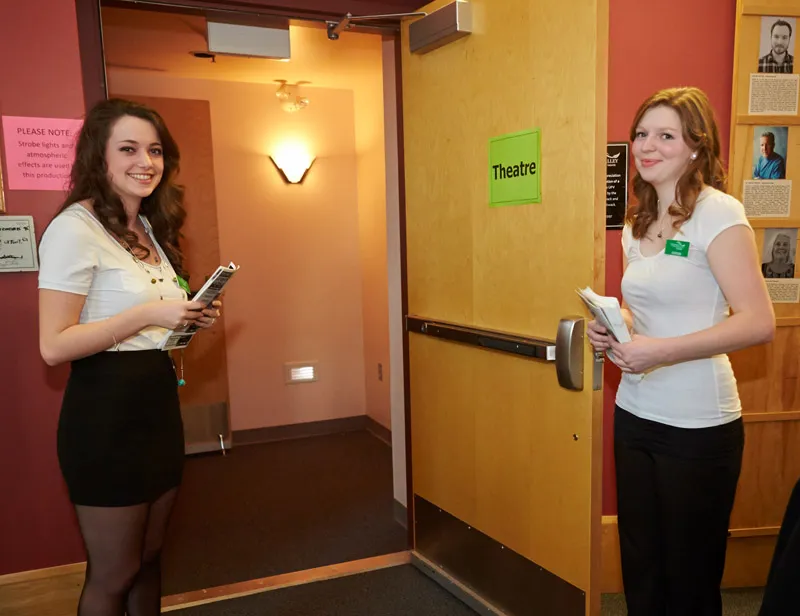
Photo: University of the Fraser Valley, CC BY 2.0, via Wikimedia Commons
There is a particular kind of knowledge that lives at the back of the stalls. It belongs to the usher who has seen the same dance five times from the doorway, the steward who knows which stairs make people pause, the box-office assistant who can tell from a queue whether the room is going to be warm or wary. They are not the audience. They are something else: the second audience.
The view from the stairs
Front-of-house staff do not watch a show the way a critic does. They watch it in fragments. A few minutes from the aisle. A section from the back of the circle. The final bow from the foyer, through a fire door, with one eye on the latecomers. This is not a lesser view. It is a different one. It is a view shaped by repetition, interruption and the practical choreography of a venue.
By the fifth show, patterns start to appear. The same moment makes the same couple laugh. The same quiet section makes someone reach for their phone. The same lift gets a small intake of breath. The usher notices because they are not trying to review the work. They are trying to read the room. That is a skill, and it is undervalued.
Mood as a kind of movement
Audiences move, even when they are sitting still. They shift in their seats. They cross and uncross their legs. They lean forward when a dancer comes close to the front. They look at each other after a difficult section. Front-of-house staff see this movement because they are not inside the story. They are at its edge, watching the weather.
In a UK touring context, this matters. A show in a Victorian theatre in Yorkshire may land differently from the same show in a modern arts centre in Salford. The sightlines are different. The acoustic is different. The bar queue is different. The audience arrives with different expectations. The usher who has worked both rooms can tell you what the building does to the work, even if they would not put it in those words.
Access needs and the small choreographies
There is another layer to the second audience: access. The steward knows where the step-free route is. They know which door is too heavy, which lift is slow, which row has the most space for a wheelchair user. They know the choreography of arrival. They see the people who need to leave early, the people who need a quiet space at the interval, the people who are anxious about being late.
Dance makers often think about access in terms of the stage: audio description, captions, relaxed performances. All of that matters. But access also happens in the foyer, on the stairs, at the bar. The front-of-house team is often the first and last experience of the show. Their knowledge is practical, specific and hard-won. It is not a substitute for consultation with disabled audiences, but it is part of the picture.
The show without sitting in the dark
There is an odd assumption that the people who work in a venue are not really watching. They are working, so their attention is divided. That is true. But divided attention can be a form of expertise. The usher who has seen the show five times knows where the audience laughs, where they fidget, where they lean in. They know which sections make people put their coats on early. They know which endings leave the room quiet and which leave it chatty.
This is not audience research in any formal sense. It is not a focus group or a survey. It is something more like folk knowledge. It lives in the staff room and the box-office counter. It is rarely written down. And it is almost never asked for.
What makers can borrow
So what would it look like to treat front-of-house staff as part of the feedback loop? Not as a replacement for critics, peers or audience members, but as another kind of witness. A short debrief after the final show. A conversation with the ushers who worked the run. A question about when the room seemed to lose focus, or when it seemed to hold. These are not soft questions. They are about attention, and attention is the material of dance.
There is a risk of overloading already busy people. Front-of-house teams are often stretched, especially on tour. But there is also a risk of ignoring a group that has seen the work more times than almost anyone else in the building. The second audience sees the show from the doorway. They see the room around the show. That is a perspective worth borrowing.