Striking the Floor: What Happens After the Last Bow
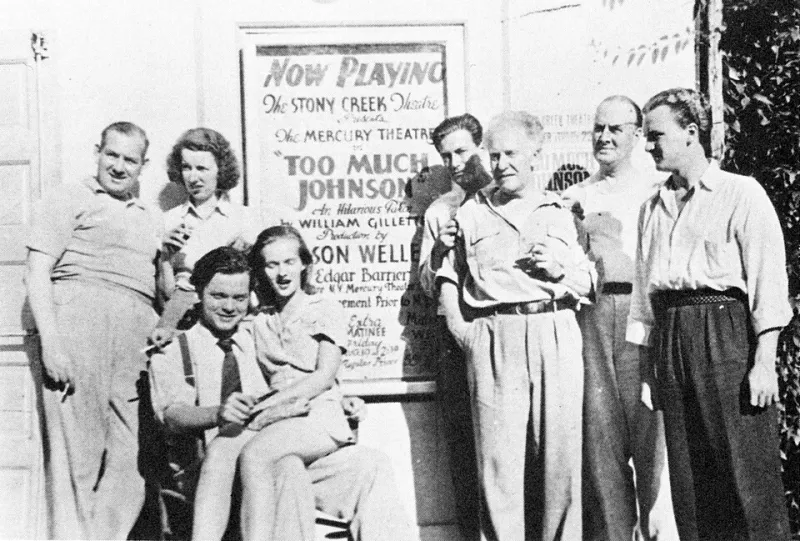
Photo: Mercury Theatre, photographer unknown, Public domain, via Wikimedia Commons
At 21:47 the auditorium is already a different room. Front of house are sweeping the bar, the last of the audience is being gently steered towards the cloakroom, and in the middle of the stalls someone is on their knees with a scraper, lifting a tape line that took ninety minutes to lay three days ago and takes about twelve to remove.
The get-out has begun. It began, if we are honest, about four minutes into the curtain call, when the stage manager glanced at the clock.
The list on the wing
There is a laminated sheet taped inside the prompt corner with thirty-four numbered items on it. It is the get-in plan, reversed, and it was written by someone who has done two hundred of these and knows that nobody — nobody — makes good decisions at eleven o'clock at night without a list. Floor up. Borders out. Risers down. Cables coiled and counted, not just coiled. The chair returned to the props bay it came from, with the spike mark matched.
I have come to think of the list as a score. It has counts, it has cues, it has a tempo, and it has a moment near the end where everything depends on one person being in the right place with the right trolley. If you have ever watched a get-out go badly, you will know exactly which item on the list it was.
Un-making, in the right order
A get-in takes four hours. A get-out takes ninety minutes and roughly the same number of decisions, compressed and with less light. The marley comes up in six rolls, numbered from the front, and the numbering is not decorative — it is the difference between a floor that lies flat at the next venue and a floor with a crease down the middle of the duet.
The strange discipline of it is that you are un-making something that took three days to make, and you have to do it in exactly the reverse order or it will not fit in the van. There is a genuine craft in that, and it is almost never written about. We talk endlessly about the rigour of the studio. The rigour of the de-rig is the same muscle, used for tidying up.
Four people, two crew and a van
The get-out is where touring relationships are tested more sharply than any tech. On the road we are five. The venue gives us two. That is seven people, one long-wheelbase van, and a loading bay with a two-hour window before the night porter locks up.
You find out who people are. There is the one who counts — always the one who counts — and the one who carries without being asked, and the one who quietly disappears for fifteen minutes and comes back with tea for everybody, which is its own form of labour and should be credited as such. There is also the argument at 23:20 about the van pack, which is never actually about the van pack. It is about being tired, and being a long way from home, and knowing the get-in tomorrow is at eight.
The care is in the small refusals. Not letting the dancer with the shoulder lift the flight case. Not letting the newest member of the team take the heavy end because they are keen. Somebody has to make that call out loud, and it is usually the person holding the list.
The hand-back
Then there is the walk round with the technical manager. Anything you moved, put it back. Anything you broke, say so now rather than let them find it on Monday. The keys, the alarm code, the state of the room. It takes six minutes and it is a form of manners, and it is also, bluntly, why you will be booked again.
Theatres remember how you left them far longer than they remember what you made in them. I do not love that fact, but I have stopped arguing with it.
What the skip does not tell you
Here is the part that has changed most in recent years. At 23:00, tired, with a drive ahead, the temptation to bin rather than bag is enormous. A skip on a dark loading bay is the easiest decision in the building. It is also the most expensive, both in money and in the quiet accounting that audiences never see.
We tour with a set of cable flight cases that have been on every date since 2019 and look it. The rostra are second-hand and will be third-hand. The white marley gets cleaned, rolled and re-homed rather than replaced, and we have started asking venues, in advance, whether they can take six metres off us or lend us four. Working to the Theatre Green Book has mostly meant writing the get-out into the budget at the planning stage rather than discovering it at midnight. Bags, labels, a proper inventory, a conversation three weeks earlier about what happens to the floor after the last show.
Sustainability in touring is rarely a grand gesture. It is a series of small decisions made when everyone would rather be in the van.
23:52
The last person out sets the alarm. The auditorium, briefly, has a sound of its own — that particular hum of a theatre with nobody in it, which is somehow louder than a full house. Then the shutter, the indicator, the wet ring road, and the quietest hour of the whole tour.
I have started to think the work includes this. The meaning of a show is not only what happened between the first cue and the last bow. It is also what a company does with a room at midnight: whether they leave it better, whether they leave each other better, and whether the floor goes on to be danced on somewhere else.