The Fitting Room as First Rehearsal: Cloth, Restriction and Muscle Memory
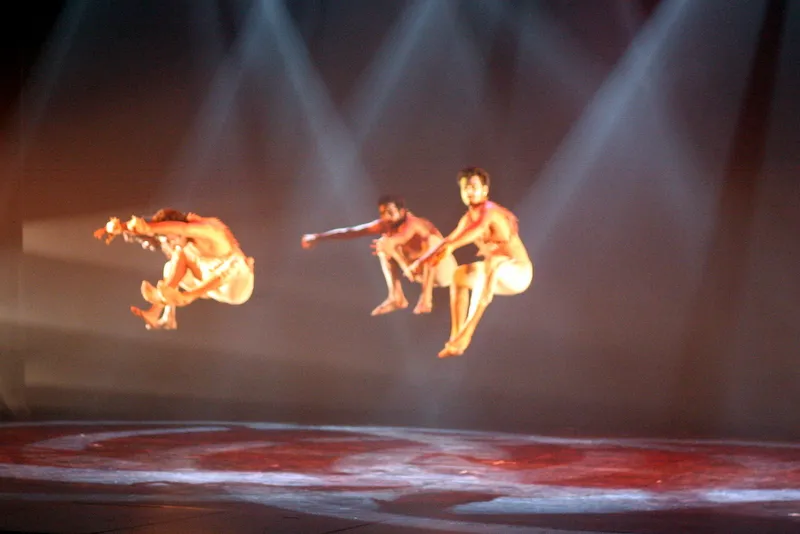
Photo: Ramesh Lalwani, CC BY 2.0, via Wikimedia Commons
Costume fittings tend to arrive near the end of the list. The choreography is set, the lighting has had a first pass, the tour dates are booked. The fitting is treated as a practical errand: check the hem, check the fastening, check the dancer can get an arm overhead. But spend an afternoon in a UK wardrobe with a rail of garments and a dancer who is still thinking through a phrase, and the fitting starts to look less like a final check and more like a rehearsal.
The rail before the mirror
A good fitting room is not a dressing room. It is a small laboratory. There is a mirror, but it is not the main event. The main event is the moment a dancer tries a movement they have been doing in joggers and a T-shirt and finds that the phrase has changed. A heavier sleeve pulls the arm back a fraction. A narrow skirt edits a stride. A wool blend that seemed sensible on the rail becomes a small weather system under stage light.
In UK contemporary dance, costumes often have to survive a lot: a week in Bristol, a rural tour with a washing machine in a holiday let, a scratch night in a room above a pub. They are not always built for the red carpet. They are built for repetition. That is why the fitting matters. It is the first place where the costume meets the actual work, rather than the idea of the work.
Fabric has opinions
Dancers are practical people. Ask them to improvise in a new garment and they will quickly tell you what it wants to do. A stiff cotton might encourage sharp, clean lines. A soft jersey might make a fall feel more available. A synthetic lining might make a turn feel slippery and slightly untrustworthy. None of this is decoration. It is information.
A useful fitting asks the dancer to run a section, not just stand still. Walk the phrase. Try the lift. Do the floorwork. See where the fabric catches, where it drags, where it makes a sound. A costume that rustles can be a gift in a quiet room and a problem in a scored one. A costume that clings can feel exposing in one venue and secure in another. The fitting is where those contradictions are allowed to surface.
Repeat wear and the memory of cloth
The first wear is never the real wear. Costumes change after the second and third outing. They soften at the elbow. They stretch at the shoulder. They take on the shape of the person inside them. This is not a failure of making. It is part of the score. A dancer who has worn the same garment for a week starts to move with it rather than against it. The body remembers the small resistances and begins to accommodate them.
That is why treating the fitting as a rehearsal is useful. It gives everyone permission to notice what the costume teaches before the music does. It also makes room for alteration as a creative act rather than a repair. Taking up a hem is not just a sewing job. It can change the line of a leg. Loosening a shoulder seam can change the reach of an arm.
What sustainable making asks of the body
There is a lot of talk in UK arts about sustainable costume making, and rightly so. Fewer garments, better fabric, repair over replacement. But sustainability is also a question of fit. A costume that is uncomfortable will be worn badly, cleaned harshly and replaced sooner. A costume that is made with the dancer in the room, tested through movement and altered before the tour, has a better chance of lasting.
That does not mean every company can afford a full wardrobe department. Many cannot. But it does mean the fitting can be treated with a bit more curiosity. Ask the dancer what the garment does to the phrase. Ask the maker what the fabric will do after ten washes. Ask the tour manager what the washing instructions will mean in a venue with no dryer. The answers are not glamorous, but they are choreographic.
The small departures
The fitting ends with pins on the floor and a list of alterations. The dancer leaves in their own clothes. The costume goes back on the rail. But something has already happened. A movement has been tested against a restriction. A memory has begun. By the first night, the costume will not be new to the body. It will have a history, even if it is only the history of an afternoon in a room with a mirror and a rail.
That is the quiet work of the fitting room. It is not the final dressing-up. It is the first negotiation between cloth and choreography, and it deserves the same attention as the first run-through.