The Long Way In: Access, Arrival and the Choreography Before the Curtain
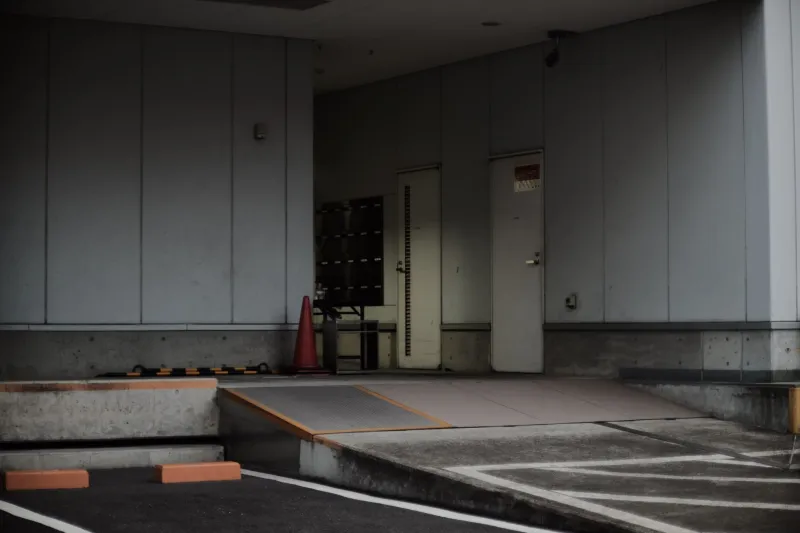
A show does not begin when the lights go down. It begins at the bus stop, the car park, the top of the ramp, the moment someone reads a sign and decides whether they are in the right place. At Janis Claxton Dance, we talk a lot about the spaces between things — between movement phrases, between performers and audience, between the studio and the street. The route into a venue is one of those spaces. It is also choreography. Not metaphorically. Literally.
The route is a score
Think of the approach to a auditorium as a sequence of instructions. Turn left at the box office. Wait by the lift. Ask a member of staff to open the door. Take the long corridor past the toilets. Enter at the side. Sit where you are put. Each of those is a move. Each has a tempo, a direction and a tone. Put together, they form a score that audience members read with their bodies before a single performer has entered.
Some of that score is written. Most of it is not. A ramp has a gradient. A door has a weight. A corridor has a acoustic. A sign has a height and a contrast ratio. A member of front-of-house staff has a script, or no script at all. These are compositional choices, even when nobody chose them consciously. In the UK, venues housed in listed buildings, 1970s arts centres and converted warehouses often carry routes that were designed around a different idea of who an audience is. The result is that some people arrive through the front door and some arrive through a side entrance that feels like a service route. That difference is not neutral. It is dramaturgy.
Dignity has a tempo
Access is often discussed as a set of facilities: a ramp, a lift, an accessible loo, a hearing loop. All necessary. But the lived experience of access is more like timing. How long do you wait to be noticed? How many times do you have to explain your needs? Is the accessible entrance also the entrance everyone uses, or does it feel like a favour? Does the route ask you to arrive early and leave late, like a stagehand rather than a guest?
I have watched audiences learn a venue's hidden choreography. Regular disabled audience members know which lift is unreliable, which door is locked, which usher knows where the step-free route is. New audiences do not. They arrive with no map and no rehearsal. The gap between those two experiences is the space between the official show and the room. It is where dignity is either composed or lost.
The language matters too. 'Accessible entrance round the back' is a sentence with a staging decision inside it. 'The step-free route is through the main doors, past reception and to the left' is a different piece of choreography. Same building. Different welcome.
A practical score for reading the approach
An access audit can feel like a clipboard exercise. It does not have to. Read the route as a score, in order, and notice what it asks of the body.
-
The approach. Start at the nearest public transport stop or car park. Is the route step-free? Is it the same route most audiences use? If not, what story does the separate route tell? Is the surface firm, lit and wide enough for a wheelchair, a walking frame or a guide dog?
-
The threshold. Look at the door. How heavy is it? Does it open automatically, or does someone have to let you in? Is there a threshold strip that catches wheels? Can you see reception before you have to ask for help? Entering should not require a rehearsal.
-
Wayfinding. Signs at eye level. Contrast, not just colour. Words as well as symbols. A map at the point where you need it, not after. The best wayfinding is almost invisible; the worst makes you feel like you have wandered into the wings.
-
Waiting. Is there a seat before the auditorium? A quiet spot? An accessible loo on the way in, not only on the way out? Waiting is part of the score. A long wait standing in a corridor is a different composition from a short wait seated near the door.
-
The lift. If the route uses a lift, treat it as part of the foyer, not as backstage machinery. Is it large enough? Are the controls reachable? Is there a mirror for wheelchair users reversing out? Is there a voice announcement? Does it smell of storage?
-
The doorway into the room. Level access. Aisle seats that are not an afterthought. Companion seats next to the person, not three rows away. Sightlines that work from a seated position. The doorway is the hinge between the route and the performance. It should not feel like a compromise.
-
The exit. Can you leave mid-show without a staff escort? Is the route lit? Is the door easy to open from the inside? An exit is not just an emergency plan. It is part of how much control an audience member has over their own evening.
This is not a checklist to tick and file. It is a score to feel. Walk it slowly. Walk it with disabled audience members, not only for them. Notice where you speed up and where you hesitate. Those hesitations are the notes.
Reshaping without a capital budget
Most access improvements are not grand architectural gestures. They are editorial. Move the sign. Reweight the door. Rewrite the front-of-house script. Put a seat in the corridor. Publish a route film with captions and audio description. Put access information in the programme notes, not buried on a webpage. Train ushers to offer the step-free route before someone has to ask. Open the main doors and staff the ramp. Ask disabled audiences what would make the approach feel like arrival rather than negotiation.
Small moves can change the whole opening. A venue that says 'we will meet you at the station' is composing a different welcome from one that says 'the accessible entrance is at the rear'. Both are practical. Only one is choreographed with care.
The spaces between the show and the room
The official performance starts at curtain-up. The room begins earlier. The ramp, the lift, the corridor, the doorway and the greeting are all part of the same composition. They set the audience's expectation of what kind of evening this will be. If the route says you are a problem, the show has already spoken. If the route says you are expected, the performance has already begun.
In 2026, as UK venues continue to balance budgets and buildings, access is not a luxury add-on. It is composition. The ramp before the room is not the long way in. It is the first image. Choreograph it with the same attention as the last.