The Microphone Is a Prop: Staging the Post-Show Conversation

Photo: post-show talkback dance audience microphone theatre, via 1000logos.net
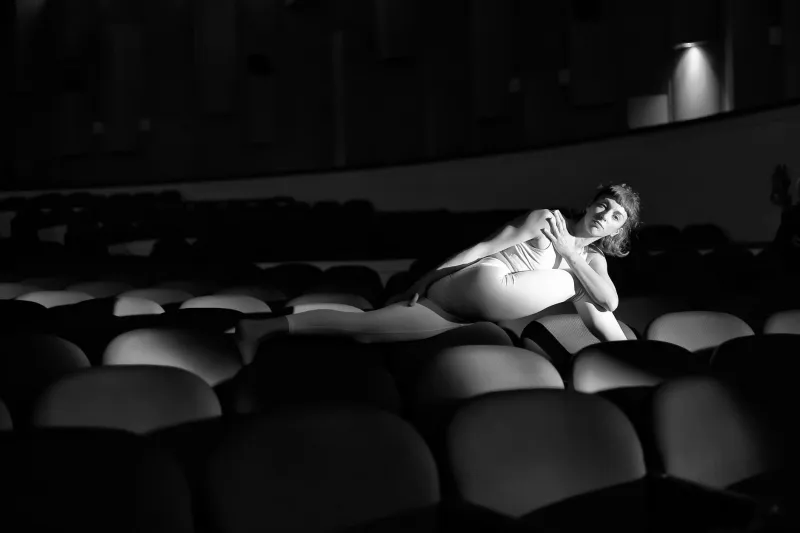
The applause fades. The dancers are still catching their breath. A producer steps into the light and says, 'We've got time for a few questions.' At that moment, a second performance begins — not the one on the call sheet, but the one the audience will remember just as vividly. The post-show talk has its own staging, its own timing and its own capacity to open a work or shut it down.
The room after the room
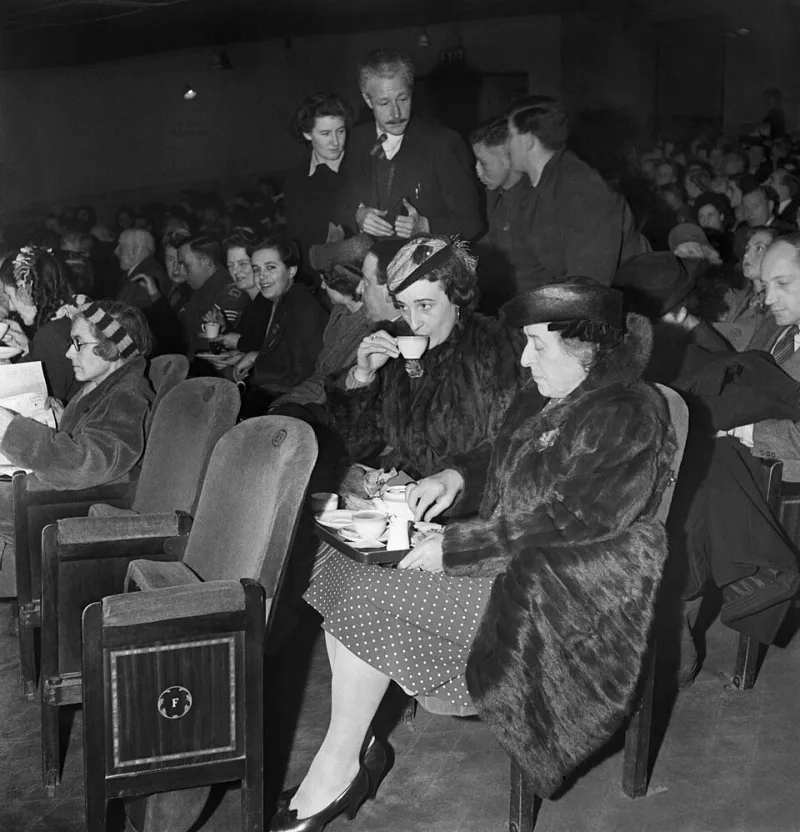
A talkback starts before anyone speaks. The house lights come up to a level that either invites or interrogates. Chairs are arranged in a row, or a semicircle, or not at all. The artists sit on the stage edge with their knees at different heights. Someone hands round a microphone. These choices are not neutral; they are composition.
In many UK venues, the default is a line of folding chairs facing the auditorium, with the facilitator standing at the side. It works, but only just. A line makes the artists look like a panel, which frames the conversation as judgement rather than exchange. A shallow arc, with the facilitator slightly off-centre and the artists at eye level with the front row, tends to feel less like a tribunal. If the stage is high, consider bringing the chairs down to the stalls. If the floor is raked, check that everyone can see everyone else. The point is not to make a beautiful picture; it is to make a room where people can think out loud.
The microphone is a prop with a job. It should be tested, charged and handed over by someone who knows how to do it without a scuffle. A dead mic is a small humiliation; a mic that gets passed around like a parcel is a distraction. Decide in advance who holds it, who moves it and who takes it back. If the venue has a roving mic, brief the operator on access needs and sightlines. If there isn't one, say so clearly and ask people to project. The practicalities are not beneath the art; they are the conditions of it.
Who speaks first
The facilitator's opening sentence sets the temperature. 'So, what was that about?' is a common opener, and it is almost always the wrong one. It asks the artists to summarise a work they have just performed, while their bodies are still warm and their concentration is still unwinding. It also implies that the work has a single meaning waiting to be extracted.
Better openings are modest and specific. 'What did you notice?' leaves room for observation without demanding interpretation. 'We're going to take a few questions, and you're welcome to disagree with each other' gives the audience permission to think aloud. 'You don't have to have liked it to have thoughts' is a small sentence that changes the room. It acknowledges that criticism is not the same as hostility, and that a dance can be interesting without being pleasurable.
The facilitator should have seen the performance, preferably from the auditorium rather than the wings. They should know the running time, the content warnings and the access provision. They should also know when to stop. A talkback that runs over by twenty minutes because no one wants to be the person who ends it is not generous; it is careless. The artists have given their bodies to the show. The facilitator's job is to protect the frame, not to fill it.
The trap of the closing statement
The most common way a talkback closes a work is by asking the artist to explain it. 'What were you trying to say?' sounds innocent, but it turns the maker into the authority and the audience into receivers. It suggests that the dance is a puzzle and the artist has the answer. In practice, most contemporary work is made precisely to resist that exchange. The meaning is in the room, distributed among the people watching, the music, the light and the memory of other dances.
A better question is 'What did you see?' or 'What stayed with you?' These questions keep the audience in the position of active viewers. They allow for disagreement. They make room for the person who noticed the floor, the person who noticed the breath, and the person who noticed nothing at all except that they were bored. All of those responses are data. None of them need to be corrected by the artist.
This is especially important on tour, when a work arrives in a town it has never met. The audience may not know the company's history, the choreographic references or the funding context. They may be seeing contemporary dance for the first time. A talkback that assumes knowledge will exclude them. A talkback that begins with 'You don't need to know anything about dance to have a response' will include them. The wording is not decorative; it is access.
Practical notes for touring teams
Put the talkback in the contract, not at the bottom of an email. If it is part of the programme, it needs a fee, a facilitator and a time slot. Ask the venue who will host, whether they have a roving mic, and what the house lighting state will be. Confirm whether the get-out can wait, or whether the talkback needs to happen in the bar. There is no point staging a beautiful conversation while the crew are loudly coiling cables behind a curtain.
Brief front of house. They are often the first people an audience member will ask about the talkback, and the last to know. Give them a line they can use: 'There's a conversation after the show, about twenty minutes, all welcome.' Make sure the line is true. If the talkback is being recorded, say so at the start. If it is being BSL interpreted, say so in the pre-show announcement and on the website. If there is a quiet room, mention it.
Give the artists a break. Ten minutes is not too much to ask. Water, a towel, a chance to change out of costume or at least out of the shoes. The artist who arrives at the talkback still sweating and half-dressed is not more authentic; they are just tired. Fatigue is part of the score, but it should not be the whole score. If the talkback is long, consider rotating artists so that no one has to carry the whole conversation. If the subject matter is heavy, have someone from the venue or the company available afterwards.
Timebox the thing. Forty-five minutes is usually enough; thirty is often better. Leave time for the audience to leave, the artists to debrief, and the crew to do their work. A talkback that ends on time is a gift to everyone in the building.
A score for the second performance
Think of the talkback as a score with three movements: arrival, exchange and exit. Arrival is the seating, the water, the mic check, the welcome. Exchange is the questions, the facilitator's prompts, the permission to disagree. Exit is the closing sentence, the thank-you, the signpost to the bar or the quiet room or the feedback form. Each movement has a shape. Each one can be rehearsed.
At Janis Claxton Dance, we have come to think of the post-show conversation as part of the work's life, not a bonus round. It is where the dance meets the day after. It is where an audience member might say, 'I didn't understand it, but I couldn't stop watching,' and discover that this is a completely legitimate response. It is where the work can stay open a little longer.
The microphone is a prop. The chairs are a set. The facilitator is a performer, even if they never wanted to be. If we choreograph the second performance with the same care as the first, we might find that the conversation does not close the work at all. It might just give it somewhere else to go.