The Unfilled Stage: A Case for Silence, Stillness and the Unresolved
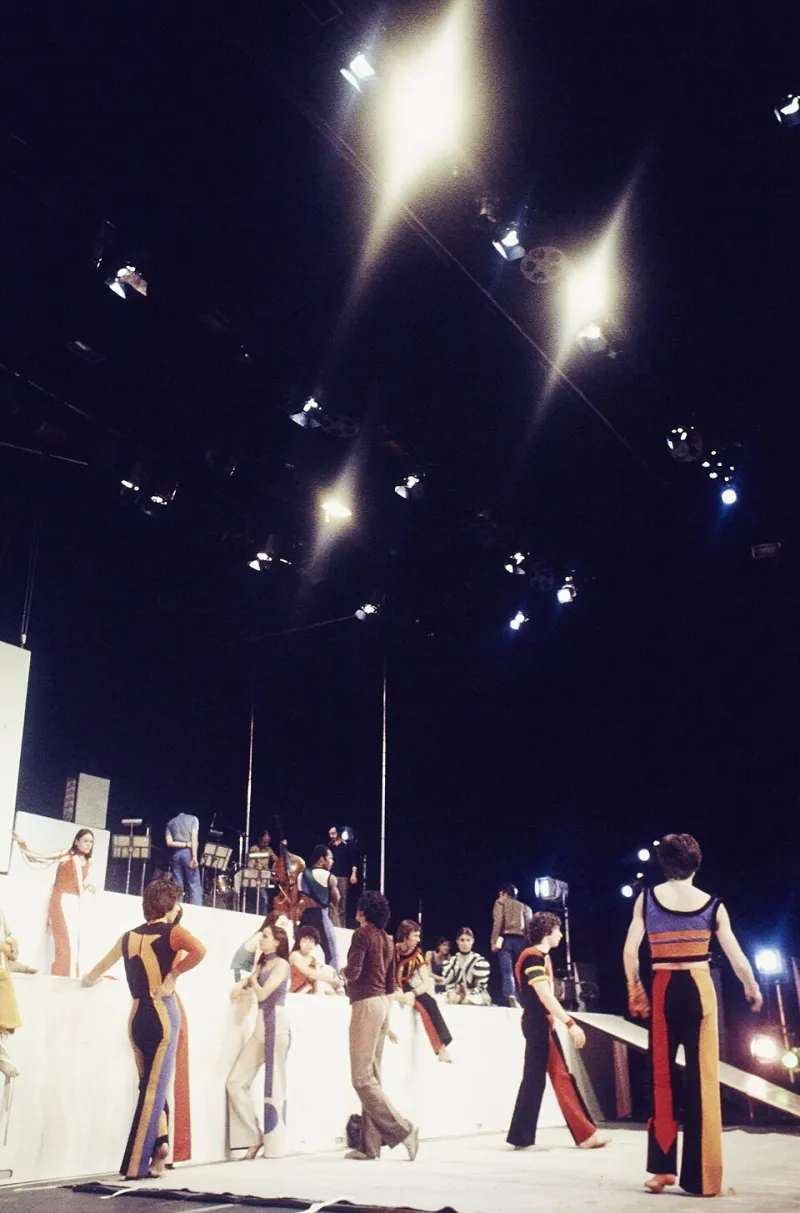
Photo: Anna Birgit (1936-....). Photographe Théâtre de la Ville (Paris). Commanditaire du contenu, Public domain, via Wikimedia Commons
There is a moment in a recent touring programme — I will not name it, because the point is not the specific work — where the stage goes dark for what feels like a very long time. No music. No movement. Just the low hum of the lighting rig and the sound of a hundred people wondering whether they are allowed to cough.
I loved it. Not because nothing was happening, but because everything was happening. The audience was doing the work. And then the lights came up and the dance continued, and I realised that the pause had done more than the previous ten minutes of choreography.
This is not a new idea. But in the UK in 2026, it feels like a radical one.
The fear of the gap
Contemporary dance in this country has become very good at filling. Filling the stage with bodies, the soundtrack with layers, the programme note with theory. Filling the silences that might otherwise be uncomfortable. Filling the space where an audience might have to meet the work halfway.
Some of this is economics. When you are touring to venues where a single night has to justify the Arts Council investment, there is a pressure to give people ‘something to see’. Some of it is habit. We train dancers to be busy. We train choreographers to justify every second.
But busyness is not the same as rigour. And a stage that is never empty is a stage that never asks a question.
Attention lives in the interval
There is a reason why the most memorable moments in dance are often the quiet ones. A held balance. A dancer standing still while another moves. The moment after the music stops, before the applause begins.
These are not decorative pauses. They are structural. They give the audience time to feel what has just happened — to let the movement settle into memory rather than being immediately replaced by the next thing. Without them, a dance becomes a list of events. With them, it becomes an experience.
I think of the late works of several UK-based choreographers who have understood this instinctively: the long slow walks, the repeated phrases that allow you to see the same movement differently on the fourth repetition, the endings that refuse to resolve. These are not failures of dramaturgy. They are invitations.
The tyranny of the resolved
One of the most persistent assumptions in British dance-making is that a work must ‘land’. It must have an ending that feels earned. It must leave the audience with something they can articulate on the way to the bus stop.
I am not against clarity. But clarity is not the same as resolution. Some of the most powerful work I have seen in the past few years has ended in a way that felt deliberately unfinished — a dancer simply walking off, a light left on, a phrase abandoned mid-gesture. These endings do not tell you what to feel. They trust you to feel it anyway.
In 2026, with audiences more distracted and more demanding than ever, that trust feels like a political act. It says: I believe you are capable of sitting with uncertainty for an hour. I believe you do not need to be spoon-fed meaning.
A manifesto for restraint
So here is a proposal, offered not as a rule but as a provocation. For choreographers working in the UK today:
- Leave one thing out. Not because you ran out of time, but because the work will be stronger without it. A costume change. A projection. A second climax.
- Let a movement repeat until it becomes strange. Repetition is not laziness. It is a way of letting the audience see.
- Use silence as a score. Not as an absence of music, but as a presence. Listen to what the room sounds like when you stop.
- Do not resolve the ending. Let the last image be a question. Let the audience leave with something still moving.
- Trust the back row. The people furthest from the stage are often the most attentive. Do not assume they need to be shouted at.
None of this is about making work that is slow for the sake of it, or quiet as a stylistic tic. It is about recognising that the spaces between movements are not empty. They are full of the audience’s own associations, memories and anticipations. When we fill them, we take that away.
The stage as a room
The most radical thing a dance can do in 2026 is to stop. To stand still. To let the audience hear themselves think. It is not a retreat from contemporary practice. It is a return to one of its oldest tools: the pause.
The unfilled stage is not an empty stage. It is a stage that has been cleared for something else — for attention, for breath, for the unresolved. That is where the work lives. And it is where the audience lives too, if we let them.