Outside the Black Box: Choreography, Civic Space and the Art of the In-Between
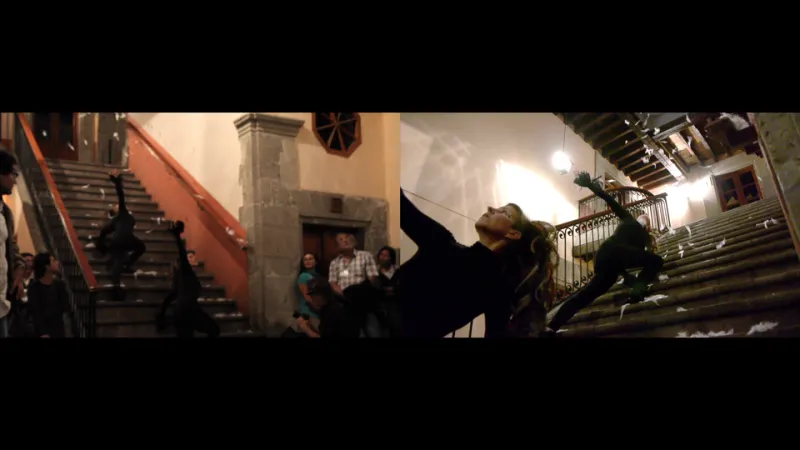
Photo: Davidamescurtis, CC BY-SA 4.0, via Wikimedia Commons
There is a particular sound a dance audience makes when it is not sure whether it is allowed to clap. It happens in libraries, in shopping centres, on station concourses. Someone starts, then stops, then a few more join in, and the applause becomes a small negotiation about what kind of event this is. In 2026, that uncertainty feels less like a problem and more like the point.
Site-specific dance in the UK is not new. Artists have been making work in fields, car parks and country houses for decades. But the current wave feels different. It is less concerned with the wow of an unusual backdrop and more interested in the ordinary rules that shape public space: where you can linger, who gets moved along, what a place asks your body to do. The work is not decorating the city. It is reading it.
The station as stage
A train station is already choreographed. Bodies queue, swerve, wait, sprint. Departure boards create crescendos. Ticket barriers create pauses. When a dancer enters that system, they do not arrive on an empty stage. They arrive inside a score that is already running.
The best site-specific work understands this. It does not fight the architecture for attention. It finds the gaps. A duet timed to the slow minutes before a departure. A solo that uses the acoustic oddity of a concourse. A group phrase that borrows the rhythm of a ticket hall at rush hour, then slows it down until everyone notices how strange the rush actually is.
This is where the practical and the critical meet. Making work in a station means thinking about permissions, risk assessments, sightlines and noise. It also means asking who the station belongs to. The commuter with a suitcase? The teenager waiting for a friend? The person who cannot afford to go anywhere? Public space is shared space, but it is not equally shared. Site-specific work can make that visible.
Access is the choreography
A library asks for quiet. A shopping centre asks you to keep moving. A park asks you to loiter. Each place has a movement vocabulary, and each one includes some people while excluding others. The choreographer's job is to notice that vocabulary and decide whether to follow it, bend it or interrupt it.
In practice, access cannot be an afterthought bolted on once the movement is made. It is part of the composition. If the audience is standing on a pavement, where are the seats? If the work uses recorded text, where are the captions? If the piece happens at dusk, how do people get home? If the performance is free, who still cannot afford the travel?
Many UK artists are now building access into the fabric of site work: step-free routes, BSL interpretation, quiet zones, audio description that treats the environment as part of the score. The result is not just a more inclusive audience. It is a more precise artwork. Access asks you to look at the space again, and looking again is the whole job.
What the gaps remember
There is a phrase that keeps returning to me when I watch this work: the spaces between. Between the station and the street. Between the library shelf and the reading table. Between what a place was built for and what it is actually used for now. These are not empty gaps. They are thick with social choreography.
A shopping centre might hold the memory of a high street that has changed beyond recognition. A park might hold the repetition of daily walks, dog walks, school runs, first dates, funerals. A library might hold the quiet labour of study, job applications, citizenship tests, children's story time. When dance enters those spaces, it can surface the memories that architecture usually keeps out of sight.
That is not the same as nostalgia. Nostalgia says: remember when this was better. Memory says: look at what is still happening here. The difference matters. Site-specific work at its strongest does not turn public space into a heritage display. It makes the present more legible.
Making work in the wild: practical notes
For artists considering this territory, a few hard-won lessons are worth passing on:
- Spend time in the place before you decide what the work is. Off-peak hours reveal different rules than rush hour. Weather changes the audience's body. Light changes the mood.
- Map the invisible rules. Where can people stand? Where will security move them on? What sounds are acceptable? Who has the power to say yes?
- Build local partners early. Libraries, councils, transport authorities and community groups are not just gatekeepers. They are collaborators with knowledge you do not have.
- Budget for the unglamorous stuff: permissions, insurance, stewarding, accessible toilets, wet-weather cover, transport for performers.
- Design multiple ways in. A passer-by should be able to stop for two minutes and still get something. A committed audience member should be able to stay for the whole score.
- Leave no trace. The work should give something to the place, not just take it as a backdrop.
The civic test
In 2026, with high streets in flux and cultural budgets under pressure, the question of who public space is for has become sharper. Site-specific dance does not answer that question. It rehearses it. It puts bodies in places where bodies are usually managed and asks what happens when they are allowed to move differently.
Not every piece needs to be political. But every piece in public is, in some way, a statement about belonging. The spaces between are where that statement gets made. And sometimes, if the work is honest, you can hear it in the uncertain applause of a crowd that has suddenly realised it is an audience.