Arrival Is a Scene: Rethinking the Foyer as Part of the Dance
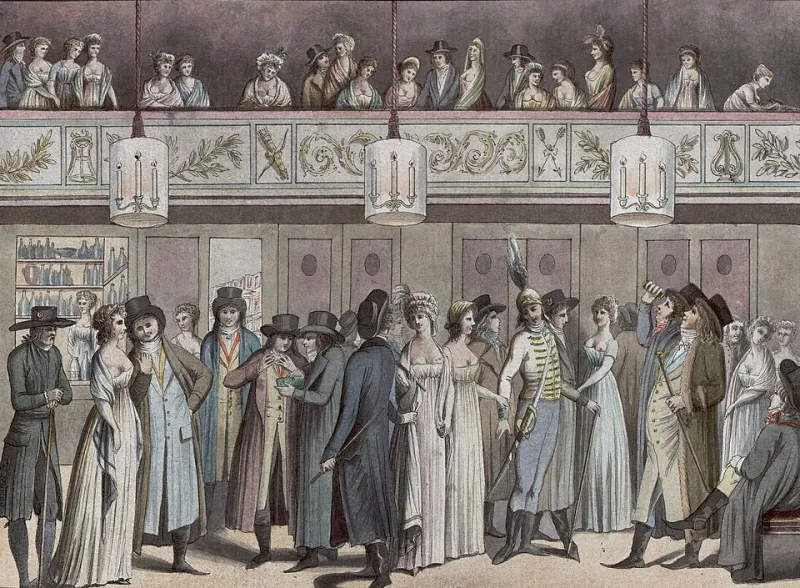
Photo: Louis Binet, Public domain, via Wikimedia Commons
We spend months on the first ten minutes of a dance. We rehearse the opening image, the first breath, the first shift of weight. Then we hand the audience over to a foyer that has been designed by nobody in particular. There is a queue. A ticket scanner. A sign about the cloakroom. A bar doing a brisk trade in crisps. Someone is trying to read a programme note under a light that was chosen for the carpet. By the time the audience reaches their seats, they have already been in a performance. We just have not been directing it.
This is not a complaint about front-of-house teams. Most of them are doing excellent work with the resources they have. It is an argument about dramaturgy. The threshold is part of the show. If we ignore it, we leave the most suggestible moments of the evening to chance.
The first ten minutes are already a score
Think about what an audience actually does before a performance. They arrive, often in a hurry. They queue. They check their phones. They find the loo. They read a programme, or pretend to. They buy a drink they may not finish. They negotiate a cloakroom. They find their seat, take off a coat, say hello to someone they know, and then wait. That is a sequence of movements, pauses and transitions. It has a rhythm. It has a temperature. It can feel welcoming or indifferent, calm or chaotic, generous or transactional. In other words, it is choreography, even if nobody has called it that.
Dance makers are good at noticing how space shapes behaviour. We should be noticing this too. The foyer is not a holding pen for the real event. It is the first room in which the audience learns what kind of attention is being asked of them.
A threshold manifesto
I do not want every venue to turn its foyer into an immersive installation. I want something more modest and more useful: a thoughtful threshold that balances atmosphere with accessibility. Here are five principles I would put in front of any programmer, producer or company thinking about arrival.
1. Orient, do not instruct
An audience needs to know where to go, what is happening and whether they can leave. They do not need a lecture. A single well-placed sign can do more than a paragraph of copy. Tell people the running time. Tell them whether there is an interval. Tell them if there are content notes, and where to find them. Tell them that they can leave and come back. This is not dumbing down. It is basic hospitality. The atmosphere can still be atmospheric; it just should not be mysterious in ways that make people feel stupid.
2. Keep the programme note short and human
A programme note is a threshold object. It is read in a state of mild distraction, often standing up. It should not try to be the essay you did not write. Three lines are enough: what the work is, how long it lasts, and one thing that might help an audience meet it. If there is a content note, put it early and plainly. If there is a question you want people to hold, ask it once. Over-explaining kills curiosity. Under-explaining can kill trust. The sweet spot is a note that sounds like a person talking, not a press release wearing a coat.
3. Design a settling space
Not everyone arrives ready to be in a crowd. Some people need a moment. A few chairs away from the bar, a quiet corner, a clear route to the auditorium: these are small architectural gestures that make a threshold more humane. They also help audiences who are neurodivergent, anxious, older, disabled or simply early. Accessibility is not a separate strand of the evening. It is part of the atmosphere. A foyer that only works for the confident and the able-bodied is not a welcoming foyer. It is a filter.
4. Let the foyer have a register, not a theme
The worst threshold interventions are the ones that try too hard: themed cocktails, actors in character, a soundscape that follows you into the loos. A little register is better than a big concept. A warm light. A clear sign. A bench. A piece of music at low volume that does not fight the bar. A single image from the work, reproduced well. The foyer does not need to explain the dance. It needs to prepare a room in which the dance can be met. Think of it as tuning an instrument, not writing a second score.
5. Choreograph the exit
The performance does not end at the last blackout. It ends on the pavement. The walk back to the street is where people process what they have seen, or decide they did not see it. A rushed exit, a locked cloakroom, a bar that shuts too early, a front door that empties people into traffic: these are dramaturgical choices, even if they were made by nobody. Leave a little time. Leave a little light. Leave a bench. Do not hand everyone a feedback form at the exact moment they are still inside the work.
The threshold is not decoration
There is a fear that paying attention to the foyer will make a dance event feel less serious. I think the opposite is true. When the threshold is thoughtful, the audience arrives with a better sense of what is being asked of them. They are more willing to take a risk because they feel held. They are more likely to talk about the work afterwards because the evening has a shape, not just a start time and a finish time.
In the UK, we have a lot of venues that are doing brilliant work with very little: arts centres, village halls, civic theatres, community buildings. They cannot all rebuild their foyers. But most can change a sign, move a chair, shorten a note, or think for ten minutes about what happens before the doors open. The threshold is part of the show. It is time we started choreographing it.