The Paper Prelude: How Programme Notes Choreograph Attention
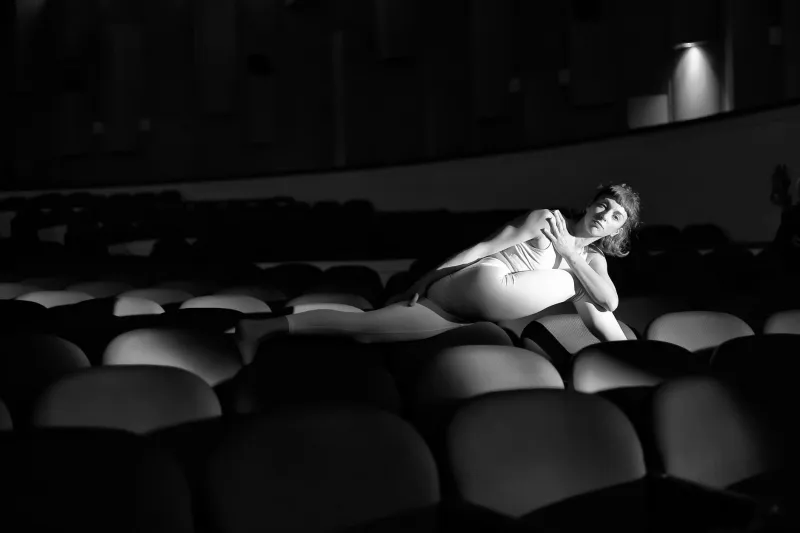
Long before the first dancer crosses the floor, another kind of choreography has already begun. It is there in the folded programme on the seat, the cast sheet pinned by the door, the pre-show email that arrived three days earlier with a subject line trying to be helpful. None of it moves. All of it moves us.
In UK contemporary dance, we tend to talk about writing as if it sits outside the work: marketing copy, access information, artist biography, the necessary bits around the edges. But anyone who has watched an audience read before a show knows that the edges are doing something. They set a temperature. They suggest where to look. They decide whether the room feels like an invitation or an exam.
The threshold is part of the work
A programme note is not simply a description of a dance. It is the first dramaturgy of the evening. It arranges attention before the lights go down. At venues from The Place to Sadler's Wells, Dance Base to Southbank Centre, audiences arrive with wildly different levels of knowledge. Some have followed a choreographer for years. Some are there because a friend booked tickets. Some are dance professionals, some are curious locals, some are in the middle of a difficult week and have come for an hour of something else.
The note meets all of them at once. That is a creative problem, not an administrative one. A line that says 'this work explores memory' tells us what to look for. A line that says 'the dancers worked with three phrases remembered from a grandmother's kitchen, a bus shelter and a school corridor' gives us something to look with. The first closes the work into a theme. The second opens it into a place.
This is why programme notes deserve the same scrutiny as a sound score or a lighting state. They are part of the frame, and the frame is part of the picture.
What a note is actually doing
A good programme note performs several small jobs at once. It welcomes. It locates. It credits. It gives permission to be uncertain. It can also prepare an audience for what they might feel, without telling them what they should feel.
The cast sheet is part of this too. It is often treated as a list of names and roles, but it is also a little stage of its own. It tells us who is in the room, who made the work, who designed the lights, who wrote the music, who is covering a role, who has been in the company for a decade. In a form as collaborative as dance, that matters. A cast sheet can be dry, or it can carry a tone. It can say: this is a live event, made by people, and you are in it with them.
Pre-show emails are the newer part of the choreography. They arrive before the journey, before the babysitter, before the pre-theatre meal. They can be generic reminders, or they can be a prologue in plain text. One sentence about what to notice. One sentence about access. One sentence about the world of the piece. That is often enough to turn a transaction into a threshold.
The problem with closing the work down
Contemporary dance writing has a habit of over-explaining in one direction and under-explaining in another. At one end, there is the artist statement full of words like 'interrogating', 'liminal' and 'practice'. At the other, there is the breezy note that says 'enjoy the show' and leaves the audience to work out why they are watching someone walk slowly across a white floor for twenty minutes.
Neither is fatal, but both can close the work down. The jargon note tells audiences that the work is not for them. The breezy note tells them that there is nothing to think about. The overly definitive note is perhaps the most risky: 'This piece is about grief' may be true, but it can also stop an audience from noticing the humour, the oddness, the moments that do not fit the thesis.
The risk is not that audiences will misunderstand. It is that they will stop looking because they have been told what to see.
Writing a note that opens
There is no single template, but there are useful habits.
Start with an image, not a thesis. Concrete details travel further than abstract nouns. A floor of chalk, a recording of a ferry announcement, a row of chairs facing the wrong way: these give the audience something to hold on to without telling them what it means.
Name the ingredients. Who is dancing? What is the sound? What has been made? A note does not need to explain the recipe, but it can list the elements without fear. 'Three dancers, a live cellist and a set made of paper' is already a kind of invitation.
Leave one question unanswered. A note that answers everything is a closed door. A note that leaves a little air in the room is a door left ajar. The audience can walk through it.
Use the cast sheet as a creative space. Credit the collaborators properly. Add a line from the rehearsal room if it fits. Let the names breathe. The cast sheet is not a receipt; it is a small record of a shared making.
Write two versions: one for print, one for email. They are read in different contexts. The printed note is read in the theatre, often in a hurry. The email is read at home, often with more patience. They do not need to be identical. They should feel like members of the same family.
Read it aloud. If it sounds like a funding report, rewrite it. If it sounds like a press release, rewrite it again. The voice should be recognisably human, even if it is formal.
Test it with someone outside the room. Ask them what they are now curious about, not whether they understand. Curiosity is a better measure than comprehension.
Think about access from the start. Plain English, large print, audio versions, BSL interpretation, content notes: these are not add-ons to the dramaturgy. They are part of how the work meets people. A note that is hard to read is a threshold with a broken step.
The ethics of framing
Who writes the note matters. If the artist writes it, the voice is close to the work. If a producer writes it, the voice may be more practical. If marketing writes it, the voice may be sharper and more public. None of these is wrong, but the artist should not hand over the first sentence to a template. The note is part of the work's public life. It deserves the same care as the title, the image, the running time.
A dramaturg can help. So can a trusted friend who is good with words. But the starting point should be the work itself, not the house style.
A small proposal
Before the next press deadline, write a hundred-word note that does three things: names one concrete element, offers one way in, and refuses one explanation. Give it to someone who has not seen the work. Ask them what they are now curious about. If they say 'I know what it means', rewrite it. If they say 'I want to see what happens when the paper starts to move', you are closer.
The lights will go down anyway. The dancers will find their places. But the paper prelude can make the dark feel less like a test and more like an invitation. That is not admin. That is choreography, of a quiet and useful kind.