Ninety Minutes of Tuning: What a Live Musician Changes in the Studio
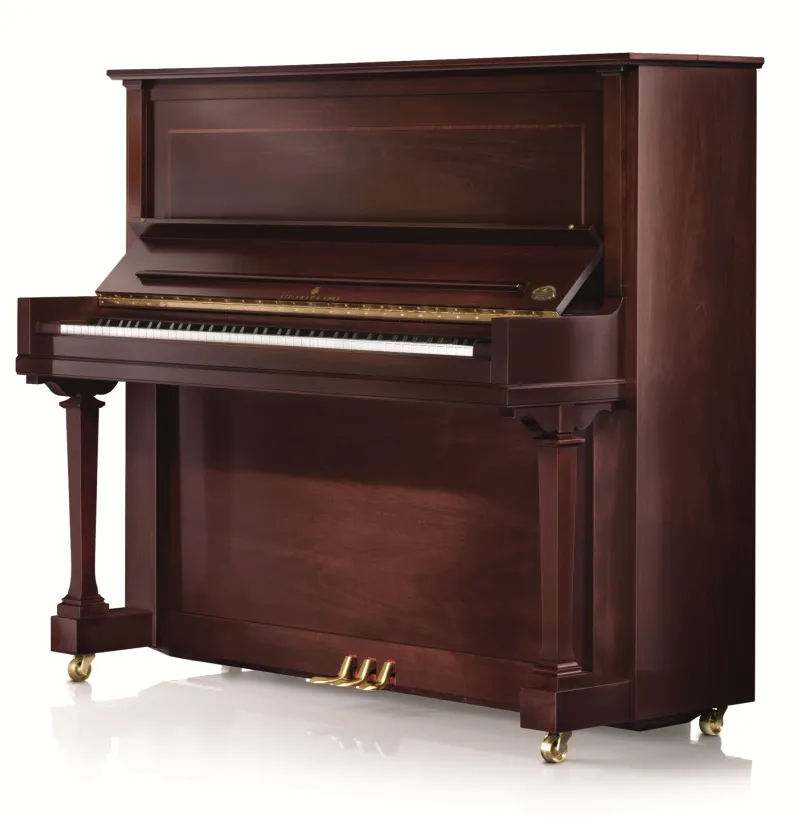
Photo: piano tuner working on upright piano in a dance rehearsal studio, natural light, via upload.wikimedia.org
On a grey November morning in a converted church hall in Leeds, the first person through the door is not a dancer. It is a piano tuner. He carries a small case, a folded cloth and the particular calm of someone who has learned not to hurry an instrument. The upright against the wall has done service for community choirs, youth theatre and at least one wedding reception. Its middle register has opinions. By ten past nine, the room is filled with the quiet, stop-start music of tuning: a note held, a pin turned, a note held again.
The dancers arrive in ones and twos. They do not begin. They hover, stretch, drink tea from mismatched mugs and listen. A rehearsal with live music starts differently from one with a laptop and a playlist. The room has a new occupant, and that occupant needs time. The tuner is not part of the choreography, but he is part of the morning. His work sets the first tempo: patient, repetitive, attentive to small deviations.
The Instrument Is a Collaborator with a Schedule
Live accompaniment in contemporary dance is often discussed as if it were a luxury added late in the process. In practice, it is a set of practical arrangements before it is an artistic one. The piano must be tuned. The percussionist needs a table that does not wobble. The singer needs to know where the radiators click. The musician needs a chair at the right height, a power socket that works, and a clear idea of when the room will be free. These are not glamorous details, but they decide how the first shared breath between musician and mover will feel.
The tuner finishes at twenty to ten. He plays a short sequence, listens, plays it again. Then he packs his case and leaves. The piano is not perfect. It is a working instrument in a working room, and the dancers will hear its imperfections every time they move. That is not a flaw in the setup. It is the setup.
Tempo Is a Negotiation, Not a Setting
When a dancer works with recorded music, tempo is a fixed line. Press play and the phrase runs at the same speed every time. With a live musician, tempo becomes a conversation. A pianist watches the room. A dancer listens for the breath before the phrase. The two adjust. Sometimes the adjustment is tiny — a fraction slower in the second bar, a little more space before the lift. Sometimes it is structural: the whole section needs to breathe differently because the musician has heard the movement from the outside and knows where the effort lies.
On this particular morning, the choreographer asks for 'a bit more air' in a sequence of walking turns. The pianist plays it three ways. The first is too careful. The second is too brisk. The third is close, but the dancer stops halfway through and says, 'Can we try it without the left hand for a moment?' The pianist lifts the left hand. The room changes. The movement becomes exposed, almost conversational. Nobody planned that. It came from the instrument being present, fallible and responsive.
What the Musician Misses and What They Hear
Most live musicians are not in the studio for the whole process. They arrive for a day, a week, a run of sessions. They miss the early improvisations, the dead ends, the arguments about direction. They see the work at a particular stage and then they leave. This is often treated as a limitation. It can also be a gift. A musician who has not been in the room for every decision hears the choreography as an audience might: as a shape, a rhythm, a mood rather than a sequence of corrections.
One percussionist I worked with once described her role as 'holding the floor steady while everyone else remembers what they meant'. She was not being modest. She was describing a particular kind of attention. The dancers knew the material intimately. She knew it only as sound and space. That distance allowed her to notice things the room had stopped noticing: a repeated rhythm that had become a tic, a silence that had grown too comfortable, a transition that needed a little more weight.
The Cost of Imperfection
There is a temptation to treat live music as automatically warmer, more authentic, more alive than a recording. In a rehearsal room, that is not always true. An out-of-tune piano can be exhausting. A musician who is unsure of the material can make the room anxious. A tempo that drifts too far can undermine the dancers' confidence. Live music asks for negotiation, and negotiation costs time.
But the cost is also the point. Dancers learn to work with what is actually there rather than what was planned. They learn to listen for the moment when the phrase wants to move rather than counting it in. They learn that silence is not empty; it is a material with its own weight. And musicians learn to watch movement as a score, not simply as a cue.
Leaving Space for the Next Breath
By four o'clock, the light in the hall has changed. The piano tuner is long gone. The pianist is packing up, and the dancers are marking through a final section without music. Someone asks whether the phrase should end on the beat or after it. Nobody answers immediately. The room holds the question.
Live music in rehearsal does not solve choreography. It complicates it in useful ways. It introduces another body into the room, another set of ears, another schedule. It makes the work less predictable and more specific. And it leaves behind a small, practical lesson: the first shared breath is not a metaphor. It is a moment you can hear, if the instrument is tuned and the room is ready to listen.