Boil First: The Green Room, the Round and the Unwritten Score of Care
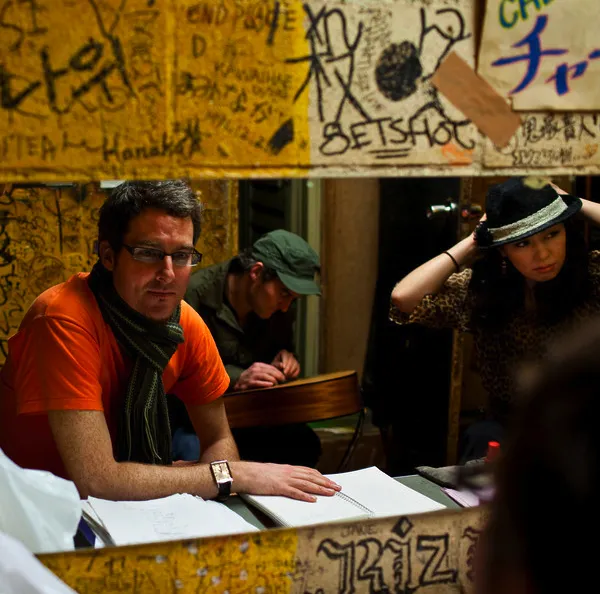
Photo: Fujimama101, CC BY-SA 4.0, via Wikimedia Commons
There is a moment on every dance day, usually somewhere between the first arrival and the first count-in, when the building makes a sound that isn't dance. A tap runs. A kettle clicks off. A cupboard door opens on a stack of mismatched mugs, and somebody says, without looking up, "Anyone?"
It is the least documented part of the schedule. It is also, I've come to think, the part that tells you most about how a company is going to behave once the doors open.
The downbeat is a kettle
A rehearsal director I worked with used to describe the tea round as the true warm-up. Not because of the caffeine — though nobody is pretending otherwise — but because it is the first piece of collective timing in the day. Someone offers. Someone accepts. Someone remembers that a third person takes theirs black, no sugar, and has done since a tour in 2019. That memory is a small act of attention, and attention is the raw material of the work.
Watch a green room for twenty minutes and you can read the hierarchy. Who arrives with a travel mug because they know the venue's kitchen is a sink and a hope. Who waits to be offered. Who makes four without being asked and never mentions it again. Who leaves a ring on the table and walks off, cheerfully, forever.
None of this appears in a technical rider. It probably should.
What the tin knows
The biscuit tin is a document. So is the note taped inside the cupboard door in a church hall in Fife, in biro, listing who is dairy-free, who is coeliac, who doesn't eat pork, who is fasting until sunset, who has a nut allergy severe enough that the flapjacks have to live in a sealed box on a separate shelf.
That note is hospitality doing its actual job: making the room usable by everyone in it, not just the people whose needs are easiest to guess. When it's done well, it's invisible. When it's done badly — a tray of sandwiches that half the company can't eat, a caterer who has been given the word "vegetarian" and nothing else — the exclusion is quiet and total. Nobody complains. Everybody notices. The afternoon gets a little flatter, and nobody quite knows why.
I've seen dietary notes scribbled on the back of a call sheet in a van. I've also seen a producer's spreadsheet with eleven columns and a colour code. The spreadsheet is better. But the scribble, made by someone who remembered, has its own kind of authority.
Who makes the first round
Here is where it gets less cosy. Hospitality in UK dance is often carried by generosity rather than budget, and generosity is not distributed evenly. The person who brings the milk is usually not the person on the highest fee. The person who notices the kitchen has run out of tea bags is often the assistant, the stage manager, the dancer on a two-day contract, the workshop leader who arrived early because the trains were unreliable.
That labour is real, and it is almost always unpaid. It sits in the same category as the person who resets the studio at the end of the day and the person who remembers to text the venue about access. It is care work wearing the disguise of personality.
Which means a company's tea table is also a class document. "Just bring a mug" assumes a mug at home, a bag to carry it in, and a journey where nothing gets broken. "We'll order in" assumes a card and a budget line. "There's a café downstairs" assumes £4.20 and a tolerance for queues. None of these are wrong. They are simply not neutral, and it helps to say so out loud once in a while, preferably before the first day rather than after the third.
The clear-up is choreography
There's a particular silence that falls when the work is finished and the room has to be returned. Chairs stacked. Cups collected. The floor swept by whoever is still standing. In a company with a culture of care, this is shared and unremarkable. In a company without one, it becomes a small, recurring resentment that nobody has the language for.
I've started thinking of the clear-up as the final phrase of the day — the part that decides whether the whole thing resolves. A company that leaves a kitchen as it found it, or better, is a company that is likely to leave a dancer's access needs as they found them: respected, not merely noted.
A modest proposal
None of this requires a budget increase. It requires a line in the schedule and a name against it. Who is responsible for the kit? Where is the dietary information kept, and who has actually read it? Is there a mug that isn't someone's personal one? Is there a chair in the room for the person who can't stand for three hours?
Small questions. Unglamorous answers. But the spaces between rehearsal and performance are made of exactly this — a kettle, a note, a round, a clear-up — and the work onstage is shaped by the room it was made in.
So: boil first. Then dance.