Who Says Go? The Studio Count as a Tiny Social Contract
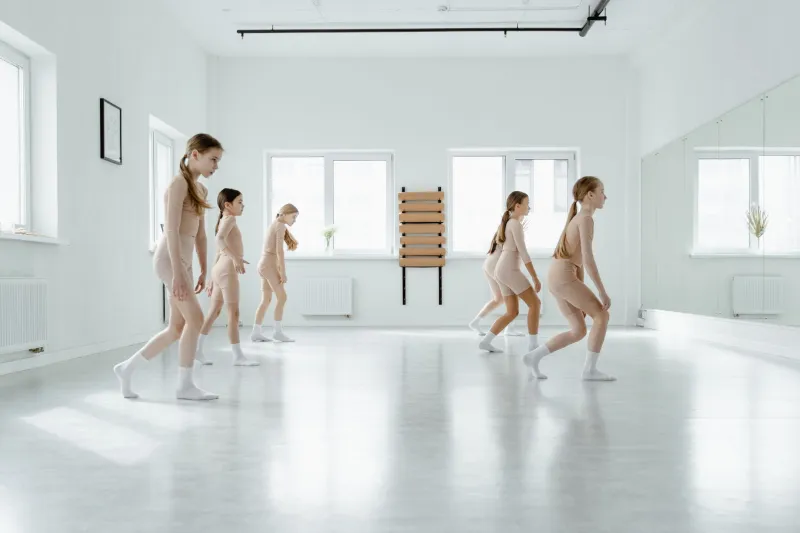
Most rehearsals begin before anyone moves. Someone stands at the front of the studio, lifts a hand, takes a breath and says, 'and a one, two...' The dancers shift weight. A shoulder drops. Eyes find a fixed point. Only then does the first step arrive. The count-in is so ordinary that it can disappear from the account of how a dance is made. But listen closely and you hear a tiny verbal score: part metronome, part permission slip, part memory aid.
The First Movement Is Spoken
Count-ins vary from room to room. In a contemporary class it might be a breath and a nod. In a jazz class, 'five, six, seven, eight'. In a rehearsal for a duet, it might be 'ready, and...' or a click of the tongue. Some leaders count backwards; some count in French; some hardly count at all, relying on an intake of breath that everyone has learned to read. The words are small, but they carry information: tempo, accent, starting foot, mood, and the question of who is allowed to say go.
That question matters. A count-in is not just a timing device. It is a miniature system of authority, trust and co-ordination. It tells you who is leading, who is following, and how much negotiation is permitted in the gap before the first beat.
A Tiny Social Contract
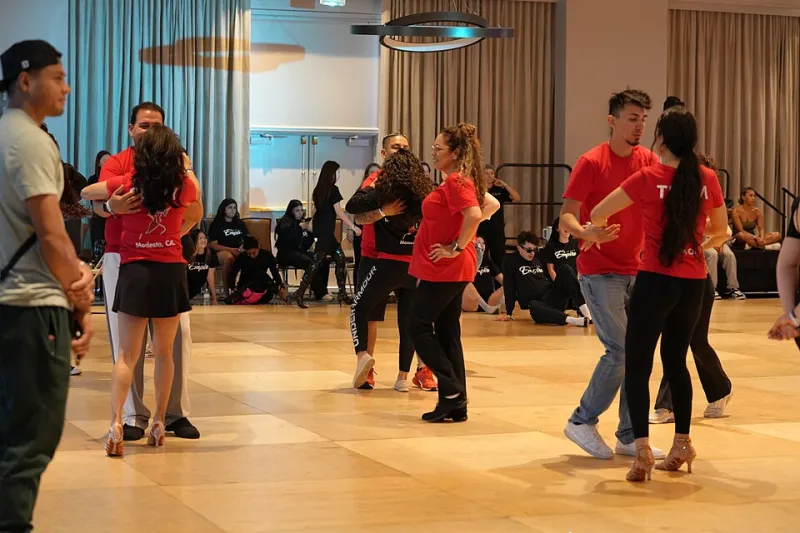
Counting in is an act of negotiation disguised as administration. A teacher's count-in can be generous or brisk. It can invite the room in or keep the room at arm's length. In professional rehearsal, a rehearsal director might say 'from the top, two bars' and then click a rhythm that everyone already knows. In a community workshop, the count might be a group affair: someone starts, others join, the room finds a shared pulse by accident and then by agreement.
Who counts is not neutral. In some studios the most senior person counts. In others, the dancer who knows the phrase best takes the lead. A new company member learns quickly where to place their attention: on the voice, on the hand, on the breath, on the person who always seems to start a fraction before everyone else. The count-in is a small social contract: I will set the time, you will agree to meet me in it. Like all contracts, it works best when both sides can renegotiate.
Habits Stored in the Voice
Every studio has count-in habits. The way a choreographer stretches 'and' or clips 'two' becomes familiar. The little accelerando before a difficult lift, the pause that is not quite a pause, the breath that lands slightly ahead of the hand. These habits are a kind of oral archive. They carry tempo, emphasis and atmosphere from one rehearsal to the next, often without anyone writing them down.
This is one of the few parts of a dance that is spoken aloud, and so it survives in the room, passed from body to body. A visiting dancer can learn a lot by listening to how a company counts. Is the count smooth or staccato? Does it sound patient? Does it tighten when the room is anxious? The count-in is not the choreography, but it is one of the ways the choreography remembers itself.
The Space Between the Numbers
Count-ins do not only fill time; they shape anticipation. The 'and' is often where the preparation lives. It is the moment when weight shifts, breath changes and the next shape becomes inevitable. Dancers use the count to agree on a future that none of them can see yet. In the gap before one, there is a collective inhale. That gap is the spaces between dancers made audible.
A good count-in leaves room for others to arrive. It does not rush the room, and it does not drag. It offers a clear edge without closing down the softness around it. A bad count-in can make the same phrase feel crowded. The steps may be identical, but the agreement is different.
Counting for Different Rooms
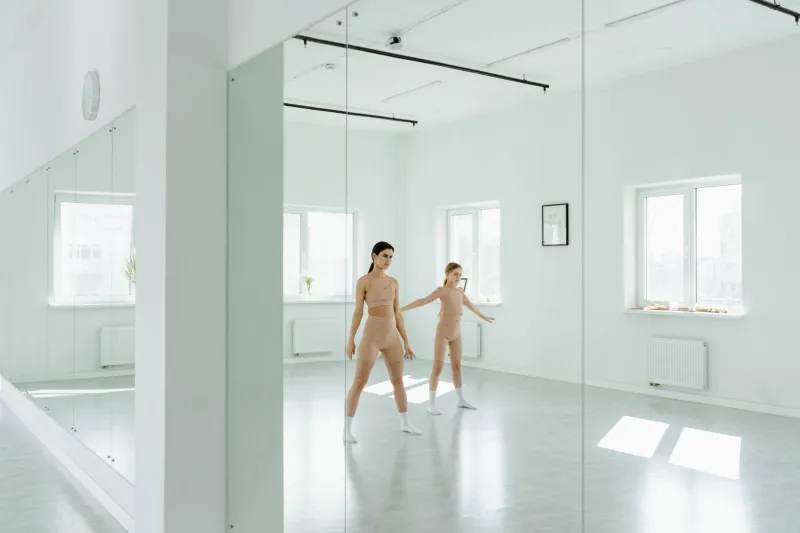
UK dance spaces are not acoustically neutral. A church hall with high ceilings, a black-box studio with mirrors, a care-home lounge with carpet and low chairs: each changes how a count-in lands. In a large hall, a clap might carry further than a voice. In a small room, a breath might be enough. On tour, the count-in adapts before anyone admits it is adapting.
It is also worth asking who the count-in is designed for. For deaf and hard-of-hearing dancers, a spoken count may be only one option. Visual counts, hand gestures, head nods, light cues and vibration can all do the same work. An inclusive count-in is not an afterthought; it is choreography at the smallest scale. It says: this is how we begin together, and this is how we make sure everyone can join.
What to Listen For
Next time you are in a studio, notice the beginning. Who initiates? Who echoes? Is there a shared breath? Does the count speed up when people are unsure? Does it slow down when the room needs reassurance? Ask what the count-in is doing besides counting. It is setting a tempo, yes, but it is also setting a tone.
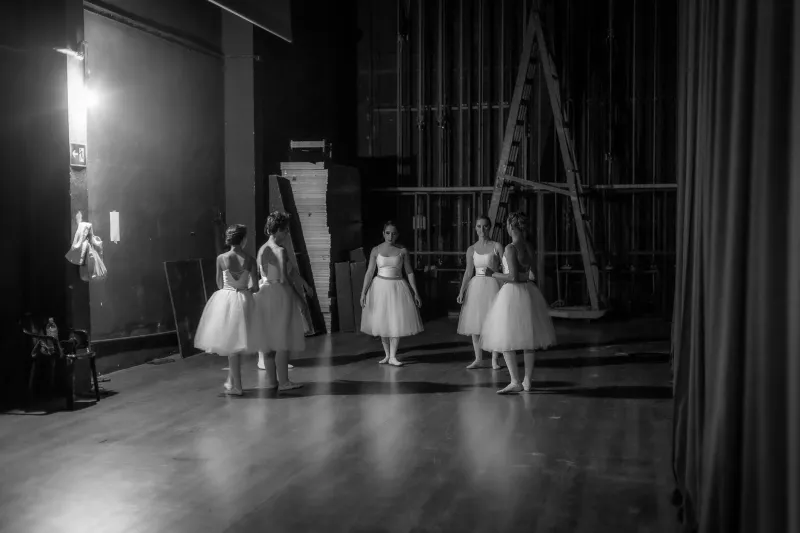
For audiences, count-ins are rarely visible. They happen in the wings, in the studio, in the gap between the warm-up and the run. But they are part of the work's social fabric. At Janis Claxton Dance, this is the kind of detail we tend to notice: the movement before the movement, the memory in the voice, the spaces between dancers before the music begins.
The count-in is not the dance, but it is where the dance agrees to begin. And that agreement, small as it is, is worth listening to.