What We Carry: Choreographing Family Papers and Old Tunes Without the Haze
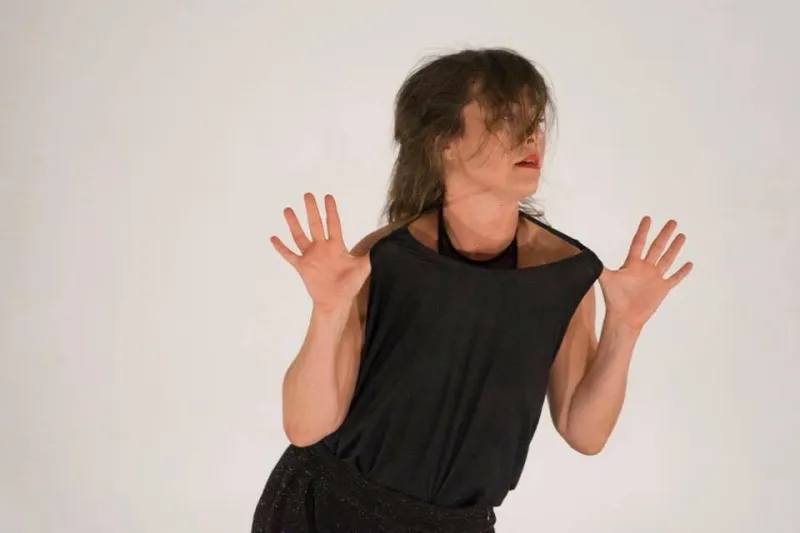
Photo: Efrat Mazor (אפרת מזור), CC BY-SA 3.0, via Wikimedia Commons
Every dancer has a box. Sometimes it is literal: letters, photographs, a passport, a cassette, a piece of fabric. Sometimes it is a file on a laptop, a voice note, a playlist. The box is the archive. The question is what you do with it without turning the studio into a museum.
Nostalgia is a comfortable trap. It smooths the edges of the past and asks the audience to feel warm. Memory is less polite. It is contradictory, partial, physical. It lives in the body as much as in the object. When dance artists work with personal archives, the aim is not to illustrate a story. It is to let the archive move.
Start with a thing, not a story
The first mistake is usually narrative. We pick up a letter and think: this is about my grandmother. We start making movement about a person. The result can be tender, but it can also be illustrative. The body becomes a caption.
Try starting with the object instead. Not what it means, but what it does. How heavy is it? What sound does it make when you unfold it? What is the texture of the paper? Does it smell of smoke, perfume, damp? Does it ask your hand to hold it in a particular way?
From those sensory facts, you can build a movement score. The weight of the object becomes a shift in the spine. The crease of the paper becomes a fold in the wrist. The rhythm of the handwriting becomes a phrase. You are not telling the story yet. You are letting the object choreograph you.
The nostalgia trap
Nostalgia edits out the difficult parts. It turns the past into a soft-focus photograph. In dance, that often shows up as a certain kind of lyricism: slow arms, wistful gazes, music that tells the audience exactly how to feel. It is not that these choices are wrong. It is that they stop the work from asking questions.
A useful test: does the movement allow contradiction? Can tenderness sit next to irritation? Can grief sit next to boredom? Can love sit next to the desire to leave? If the answer is no, the archive may be being used as a comfort blanket rather than a creative partner.
Another test: what happens if you remove the music? If the piece collapses without the old song, the song may be doing the emotional work. That does not mean you cannot use it. It means you need to decide what the body is doing that the song cannot.
Exercises for the studio
These are starting points, not prescriptions. Adapt them to your practice.
-
Object score. Choose one archive object. Write down five physical qualities: weight, texture, temperature, sound, smell. Make five movements that respond to those qualities. Do not mime the object. Repeat the phrase until it becomes unfamiliar.
-
Letter as rhythm. Read a letter aloud. Mark the breaths, the pauses, the places where the handwriting speeds up. Turn those marks into a movement phrase. Then remove the text and keep the rhythm.
-
The missing person. Look at a photograph. Instead of copying the pose, recreate the negative space around the person. What is absent? Who took the photo? What was just outside the frame? Build a solo from the edges.
-
Oral history overlay. Play a recorded interview while you move. Do not act out the words. Let the voice be a texture. Notice where your body agrees or disagrees with what is being said.
-
Duet with the archive. One dancer holds or wears an archive object. The other dances in relation to it. The object is not a prop; it is a partner with rules. What happens when the object is hidden, dropped, offered, withheld?
-
Destroy and rebuild. Perform a phrase that feels nostalgic. Change one rule: speed, direction, eye contact, proximity. Perform it again. Keep changing until the phrase stops relying on atmosphere.
Questions for audiences
If you are making work from memory, it can help to give audiences a way in that is not purely emotional. Consider asking:
- What did you recognise in the movement, and what did you not?
- Whose memory was missing from the room?
- How did your body respond before you had a thought about it?
- Where did the work ask you to look away, and why?
- What would you have kept, and what would you have cut?
These questions do not need to be printed in a programme. They can be part of a post-show conversation, a workshop, or a note in the foyer. The point is to keep memory active rather than sealed.
Artist insights from the UK
UK artists have been working this territory for years, often in ways that resist easy nostalgia. Siobhan Davies' digital archive, RePlay, treats documentation as a living resource rather than a shrine. Gary Clarke's work drawing on coal-mining heritage holds memory and anger in the same frame. Rosemary Lee's site-specific and community-rooted pieces often activate local memory through repetition, place and the bodies of people who actually live there.
What these practices share is a refusal to let the archive be a vault. The material is not there to be preserved exactly as it was. It is there to be rehearsed, questioned, recombined. The body is not a container for the past. It is a place where the past gets renegotiated in the present.
Leave the haze
The archive is not a story you owe the audience. It is a set of materials you can move with. If you start with the object, allow contradiction, and keep asking what the body is doing that the photograph cannot, you are less likely to end up with nostalgia. You are more likely to end up with a live question.
In 2026, that feels like a useful ambition. The past is not behind us. It is in the room, in the muscles, in the way we hold a letter or hear a song. The work is to let it move without letting it settle.