The Room Sits First: Chairs, Sightlines and the Attention a Dance Inherits
There is a moment in every get-in when the room is still unfinished and the chairs are still a stack. Plastic ones, stacking ones, the good upholstered ones from the side store, perhaps a few benches with a parish-hall wobble. For a while, the space is pure potential. Then someone starts placing them, and the audience begins to exist.
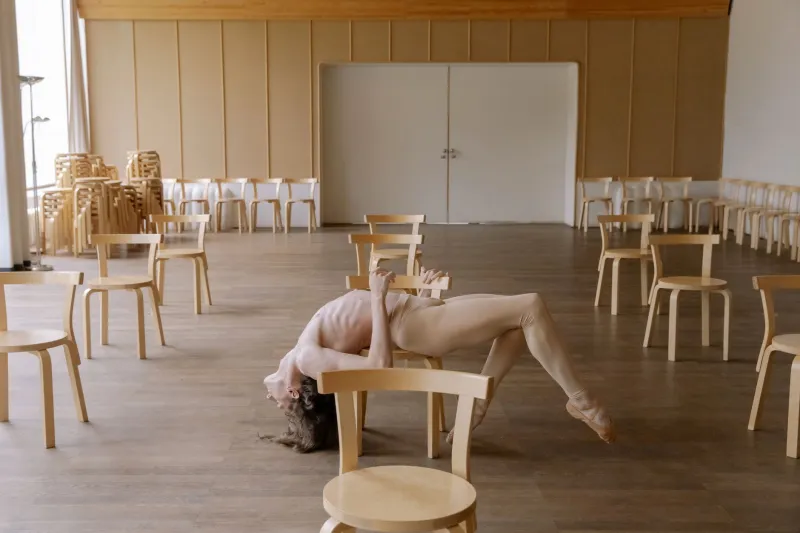
That is the part I keep returning to. Long before the first cue, the seating plan has already choreographed something. It has decided where the front is, how close people sit to each other, whether a late arrival can slip in without becoming a scene, and whether the room feels like a shared event or a series of private views. The chairs are not neutral furniture. They are the first set of instructions.
The first move is furniture
In a studio theatre, the seating often arrives with a certain authority. Raked rows, fixed sightlines, a technical team who know where the sightline breaks. In a village hall, the authority is more homemade. Someone knows that the back row cannot see over the piano, someone else remembers that the radiator clicks, and the committee has strong views about whether the chairs should face the fire exit. In a festival tent, the seating may be a few picnic benches, a scattering of hay bales and a crowd that decides for itself whether to stand.
All three rooms are legitimate places for dance. But they do not ask the same thing of an audience. A raked row says: sit here, look there, the performance is in front of you. A circle says: we are all in this together, and you may catch someone else’s face in your peripheral vision. A cabaret layout says: you are allowed to turn to your neighbour, but you may have to twist to see the dancer. No seating plan is simply practical. Each one is a small theory of attention.
Rows: the promise of a shared front
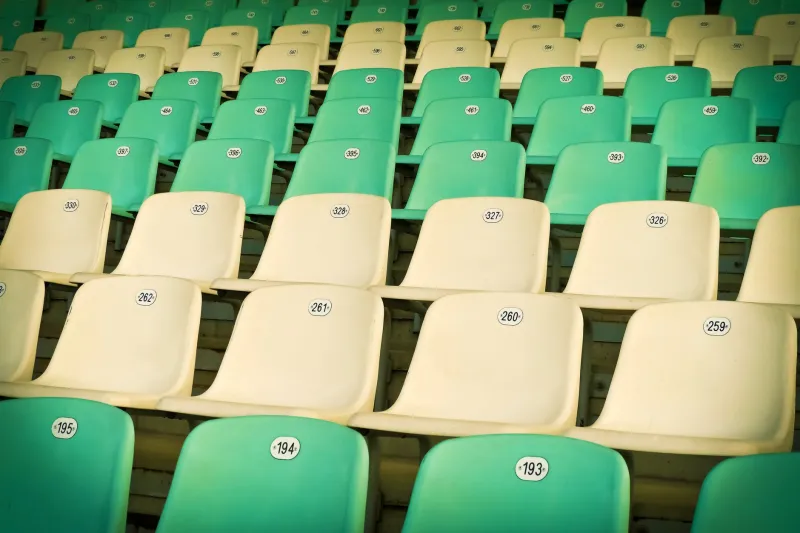
Rows are efficient, familiar and quietly powerful. They gather people into a common direction and make the performance the clear centre of gravity. For narrative work, or for dance that relies on precise spatial patterns, rows can be generous. They give the eye a stable frame. They also make the audience legible to the performer as a single body, rather than a set of chatting tables.
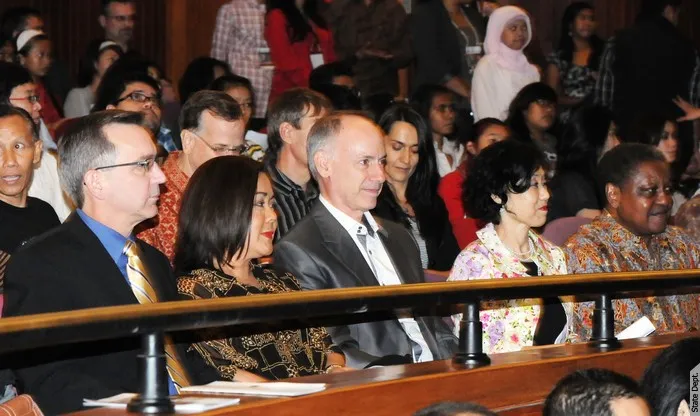
But rows have their own drama. The front row is exposed; the back row is protected. Tall people apologise. Latecomers become visible. Access needs can be harder to accommodate if the seating is tightly packed, and a wheelchair space at the side can feel like a footnote rather than part of the room. When we choose rows, we are choosing a certain kind of collective focus. We are also choosing who gets the best view and who gets the leaning-forward version.
Circles: no back row, no hiding
A circle can be a lovely thing in a community setting. It says that everyone is part of the room, not just a spectator to it. For workshops, scratch performances and work that depends on eye contact or shared breathing, a circle can soften the boundary between stage and audience. It can also be unnerving. Some people do not want to be seen watching. Some people need a clear exit. Some people simply want to look at the work without also being looked at.
A circle is not automatically kinder. It is a different social contract. It can create intimacy, but it can also create pressure. The useful question is not whether a circle is more democratic in principle, but whether it suits the dance and the people in the room. A circle of chairs around a solo in a village hall may feel like a gathering. The same circle around a highly technical piece in a studio theatre may feel like a workshop that forgot to start.
Cabaret and clusters: sociable but sideways
Cabaret tables, clusters of chairs and café-style layouts are having a quiet moment in UK programming, partly because they let venues sell a more sociable night out. They can work beautifully for dance that wants a cabaret atmosphere, a sense of closeness, a bit of audience murmur. They can also make the performance harder to read. If half the audience is angled towards a table rather than the floor, the dancer is competing with the room’s social geometry.
Clusters are not wrong. They are just specific. They suggest that the evening is as much about being together as it is about watching. For some work, that is exactly right. For other work, it means the person at the back of a table spends the whole show leaning around a friend’s shoulder. A maker once described this to me as “the sideways audience” — present, warm, but never quite facing the same way. It is worth knowing which kind of audience your piece needs before the tables go in.
Standing, sitting, moving: festival tents and village halls
In festival tents, seating is often provisional. People drift in, stand at the back, sit on the grass, leave for a drink. That looseness can be energising. It can also mean that the dance has to work harder to gather attention. In a village hall, the opposite can happen: the chairs are arranged with such care that the room feels formal before anyone has arrived. Neither is better. Both are information.
What matters is whether the layout matches the invitation. A seated audience in a hall may be ready for a full-length work; a standing crowd in a tent may be ready for something shorter, stranger, more intermittent. The seating plan is part of the dramaturgy, even if it never appears in the programme.
A short field guide for choosing a layout
- Start with the work, not the furniture. Ask what kind of attention the dance needs: sustained, intimate, restless, communal, private?
- Check sightlines from every seat, not just the centre. Sit in the back corner. Sit at the side. Sit where a wheelchair user would sit.
- Protect access routes. A clear aisle is not a compromise; it is part of the choreography of arrival and exit.
- Decide how close you want people to feel. Rows create focus; circles create visibility; clusters create sociability. Choose deliberately.
- Leave room for latecomers and early leavers. A room that makes every movement visible can make people feel trapped.
- Brief front-of-house staff on the plan. They are the people who will explain it, adjust it and sometimes rescue it.
- Test the layout with bodies before doors. A drawing can lie; a stack of chairs and three tired people usually cannot.
After the last chair
When the show is over and the chairs go back into their stack, the room returns to being a room. But something of the layout lingers. Audiences remember whether they felt close or far away, whether they could see, whether they felt welcome. Makers remember whether the work landed or had to fight the geometry.
Seating is never just seating. It is the quiet first movement of the evening — the part that tells everyone where to put their attention. Get it right, and the dance begins before the dancer does. Get it wrong, and the room keeps choreographing something else.