The Key Code and the Countdown: Making Dance in Rooms You Don’t Own
There is a particular sound a studio makes when you have only three hours in it: the click of the door behind you, the caretaker’s trolley somewhere down the corridor, the faint hum of a radiator that has just decided to come on. You put your bag down. You check the clock. The room is yours, but only until the next name on the list arrives.
Borrowed studio time is the ordinary condition of a lot of contemporary dance in the UK. Arts centres, church halls, school gyms, converted warehouses and the upstairs rooms of pubs all enter the rehearsal schedule, each with its own key code, its own rules about tape on the floor, its own idea of what a suitable temperature might be. The booking is a practical matter. But it is also a choreographic one. A room with a return time does something to the way movement is made.
The Room Arrives Before You Do
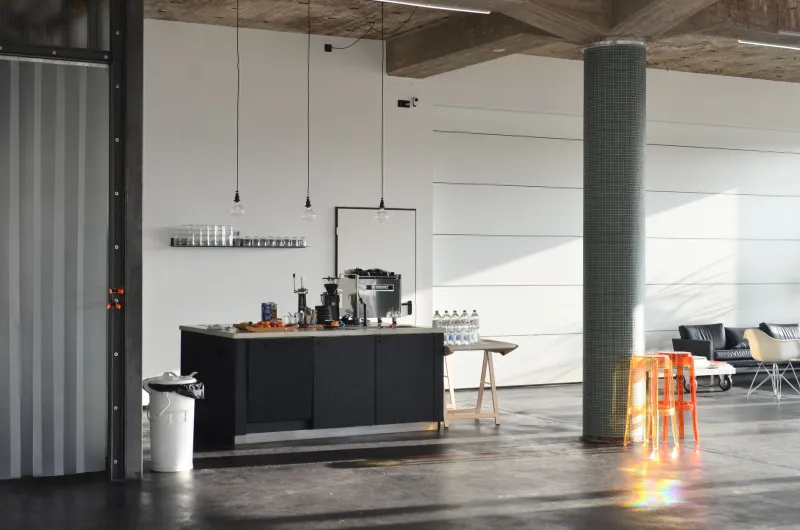
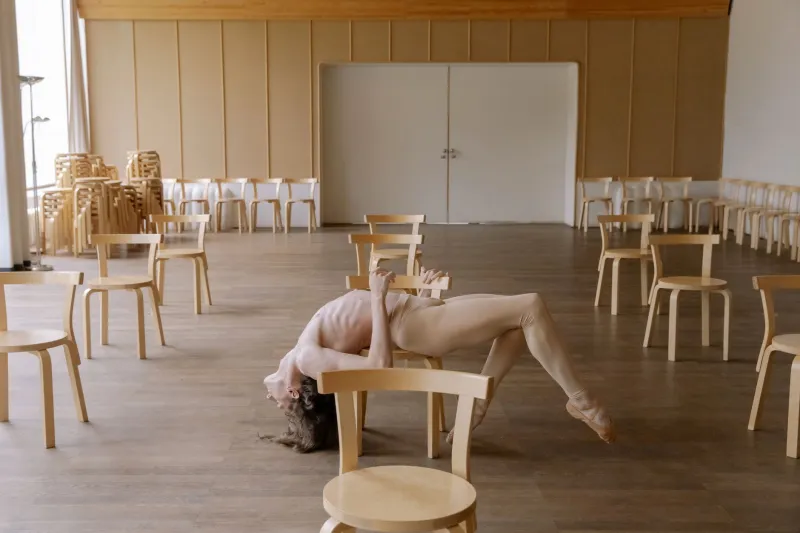
A borrowed studio is never empty when you walk in. It is full of the previous hour. Chairs are stacked against one wall. There are marks on the floor from a youth theatre group or a yoga class. The piano is slightly out of tune, or there is no piano at all. Someone has left a notice about fire doors. The mirrors may be spotted, or missing, or positioned in a way that makes the space feel like a corridor with ambitions.
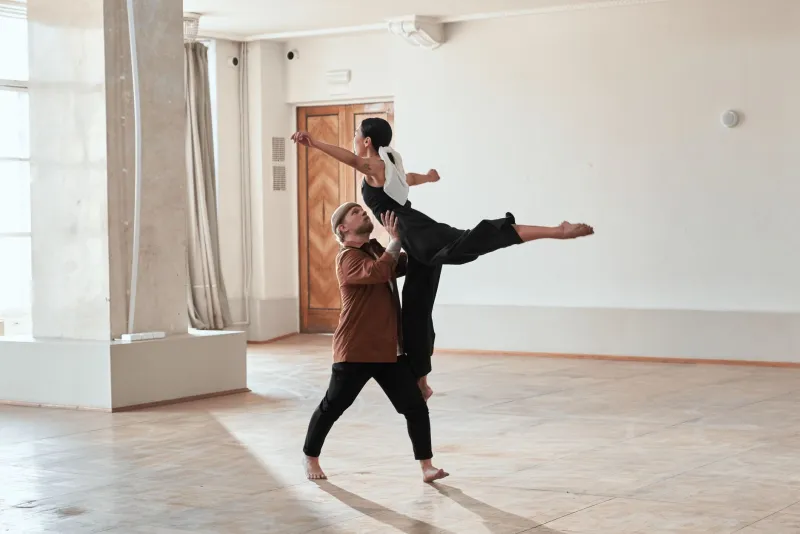
Dancers are good at this. They read a room quickly — where the sprung floor ends, where the lino begins, which corner has a draft, which wall is safe to push off. Before anyone has warmed up, the space has already asked for adjustments. The choreography begins as a negotiation with architecture.
Marking, Running, and the Economy of Energy
When the slot is short, the body learns to ration itself. Full runs are expensive. They take time, recovery and a certain psychological ease that comes from knowing you can repeat something if it goes wrong. In a three-hour hire, with a commute either side and maybe another group waiting, the temptation is to mark. To walk the phrase. To say the counts rather than dance them. To save the running for the final twenty minutes, when the clock has become a kind of director.
There is a loss in that. Marking can protect the body, but it can also protect the choreography from the mess of full effort. Some material only reveals itself at performance speed — the way a lift actually lands, the way breath changes a phrase, the way a group of dancers starts to listen differently when they are slightly out of control. If the room never allows for that, the work may stay polite. It may stay a plan rather than a piece.
But there is a gain too. Short slots make decisions sharper. When you know the floor is temporary, you rehearse the essentials. You stop tidying and start choosing. Dancers become excellent at finding the centre of a phrase without running the whole thing. Choreographers learn to trust the part of the work that can travel — the bit that does not depend on a particular mirror or a particular corner.
What the Floor Remembers
Memory in dance is not only in the body. It is in the room. A dancer remembers a sequence because it happens near the radiator, or because the turn is timed to the squeak in the third floorboard, or because the duet finishes under the clock. Move that material to a different studio and the memory wobbles. The phrase is there, but the landmarks have gone.
This is one of the quiet costs of borrowed space. The work becomes attached to places that were never really yours. A temporary floor holds a temporary memory. When the room is unavailable next week — because of a wedding, an exam, a repair, a better-paying hire — the company has to rebuild the geography of the piece somewhere else. Sometimes that is useful. It exposes which parts of the choreography are genuine and which were only ever habit. Sometimes it is simply tiring.
The Social Life of a Shared Studio
A shared room is also a small social space. You meet the caretaker who knows which window sticks. You nod at the theatre group coming in after you. You learn the etiquette of the corridor: where to leave shoes, how to stack the chairs, when to stop the music because the room next door is recording. None of this appears in the choreography, but all of it shapes the day.
In a country where studio space is expensive and often precarious, these overlaps are not incidental. They are part of how dance survives. The borrowed room makes a kind of improvised community. It also makes clear that the work is not sealed off from the rest of the building. The piece has to coexist with other people’s schedules, other people’s noise, other people’s need for the same floor.
The Clock in the Corner
The clock is the most honest collaborator in the room. It does not care about the phrase. It does not care that the transition has just started to make sense. It says: twenty minutes. Then: ten. Then: the next group is here.
Choreography made under that pressure often has a certain decisiveness. It learns to end. It learns to choose the version that can be repeated rather than the version that might be perfect. But it can also lose the long middle — the drift, the boredom, the accidental discoveries that happen when no one is watching the time. Some of the best material arrives after the point where a short hire would have sent everyone home.
Leaving It as You Found It
The last ritual of the borrowed studio is the reset. Tape comes off the floor. Chairs go back. The music stops. You take a photograph of the floor plan because you know you will not remember it next week. The room returns to being a room, and you return to the street with the work carried somewhere between the body and the notes.
The borrowed studio is not the ideal condition for making dance. But it is an honest one. It makes work that knows it is temporary, that knows it shares its space, that knows the clock is in the corner. The room is never quite yours — and perhaps that is part of what the piece learns to hold.