The Long Middle: Freelance Dance and the Work Between Projects
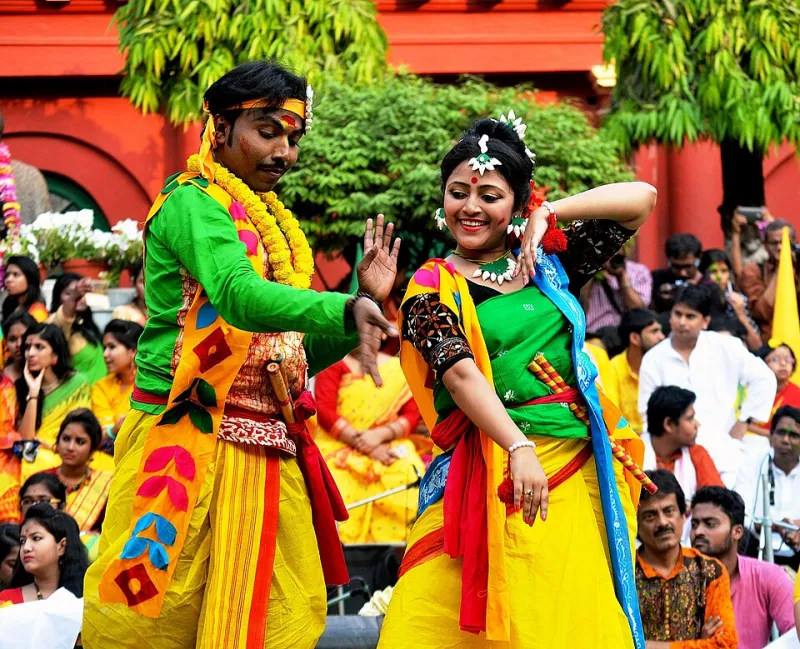
Photo: Tushar Baran Sinha, CC BY-SA 4.0, via Wikimedia Commons
Most conversations about freelance dance work begin with the projects. The tour. The residency. The scratch night. The funding award. Those are the visible marks on the map, and they are the ones we tend to put in the newsletter.
But anyone who has pieced together a year of self-employed practice in the UK knows that the real choreography happens in the gaps. The week after a show closes. The month before a decision lands. The strangely elastic Tuesday when the only things on the schedule are an invoice, a risk assessment and a half-written application.
In 2026, the freelance calendar still feels less like a season and more like a weather system. Applications open, decisions arrive, projects cluster, then the inbox goes quiet. The quiet is not a holiday. It is the long middle.
The calendar is not a season
A freelance dance life rarely has the clean arc of a producing house. There is no autumn programme handed down from above. Instead, there are overlapping deadlines, different funders, school terms, venue availability and the small matter of actually making the work.
I have learned to stop describing the gaps as 'time off'. They are not. They are the infrastructure that makes the visible work possible. They are where the reading happens, where the studio idea gets tested without a press release attached, where the relationship with a curator is quietly maintained over coffee.
That does not make them easy. The gaps can feel exposed. They can feel like evidence that you are not busy enough, even when you are working every day. The sector often measures value by output, and output is easy to count: performances, participants, tickets, workshops. The long middle is harder to count. It is also where much of the thinking lives.
Admin as rehearsal
There is a particular kind of fatigue that comes from writing about your practice in the language of a funding application. You start to hear your own ideas turn into bullet points. You describe access, evaluation and public benefit. You learn to say 'place-based' and 'co-created' without flinching.
But admin is not the enemy of creativity. It is a rehearsal for clarity. If I cannot explain the work in a paragraph, maybe I do not yet know what it is. If the budget does not add up, the idea has a problem too. The spreadsheet can be a dramaturg.
That said, the admin should not eat the whole week. I now budget for it as a line in every project, rather than pretending it will fit around the edges. I keep a folder for reusable text: biographies, technical notes, access statements, image credits. I share draft applications with two trusted colleagues and ask them one question: what is the actual proposition here?
These are small acts of self-preservation. They also make the gaps less chaotic, which means there is more room in them for movement.
The waiting room
The waiting room is its own rehearsal space. You send the application. You wait. You refresh the inbox. You try to remember that a decision is not a verdict on your worth as an artist, even though it can feel like one at 8am on a Thursday.
I have started to treat the waiting period as a defined chunk of time with its own rules. No checking before 10am. No rewriting the budget in my head at midnight. One hour a day on the next thing, even if the next thing is only a page of notes. The point is not to be productive in a punishing way. The point is to keep the practice warm.
Warmth matters. When a project ends, the body does not immediately know what to do. The studio rhythm disappears. The group chat goes quiet. The diary opens up like a room with the furniture removed. It can be liberating and disorienting in the same afternoon.
A practice of the gaps
What would it look like to choreograph the gaps deliberately? Not fill them, but compose them. A walk with no headphones. A morning in the studio with no outcome. A reading list that is allowed to be unfinished. A conversation with another freelancer about money, care and the strange guilt of not being on tour.
I keep a between-projects log now. It is not a diary and it is not a to-do list. It records what I notice when there is no show to make: a phrase that keeps returning, a piece of music I am avoiding, a question about audience that I cannot yet answer. Some of it becomes work. Some of it does not. The log makes the long middle visible to me, which is often enough.
The humane argument is simple. Freelance artists are not project-delivery machines. We are people with rhythms, responsibilities and fallow periods. If the sector wants better work, it has to allow for the unglamorous time that makes better work possible. That means fair fees, yes. It also means a culture that does not treat the spaces between grants as empty space.
The gaps are not a break from the choreographic practice. They are part of it. The trick is to stop apologising for them and start listening to what they are trying to say.